Rolfer, Dancer, Teacher

Archive for the ‘Continuing Education’ Category

Loving All Of It: Embracing Exploration at a Gay/Bi Men’s Tantra Retreat

CW: sexuality, boundary violation, scatalogical

“Everyone should get to experience the camaraderie of gay men at least once in their life.”

This was the support my friend Amber offered when I shared with her that I would be attending a Tantra Retreat for Gay and Bisexual Men. I was talking to Amber about this because I felt shaky in the decision. I wasn’t unsure that I would go but I had a lot of uncertainty about why I was going.

In November I’d seen a post about the Triangle Gay Men’s Tantra Group and a little light went on within me that softly said “That. There’s something here for us, look into it.” I’d contacted one of the organizers and after a little back and forth had surprisingly landed on a 7-day immersion in Zipolite, Mexico as the point of exploration. After years of making peace with the feminine, I was feeling called to engage more deeply with the masculine.

This isn’t entirely new for me. I’ve been a seeker most of my adult life. After reading The Art of Happiness at 20 and realizing I didn’t feel remotely that good, my fate was sealed. So I had some trust in my instinct to attempt this even though I didn’t have a lot to go on in terms of why.

Men aren’t an entirely new territory to me. At age 10 I remember thinking if I was seeking a soulmate it seemed silly to immediately count out half the world’s population. I’ve had a few rounds of attraction with specific men throughout my life but nothing that ever developed a significant depth or physical connection. And actually leaning into this exploration had resurfaced the memory that my first playing-at-sex experience was with another boy somewhere in elementary school. Over several sleepovers we found ourselves repeatedly acting out a scene from Police Academy 3 until we were admonished about locked doors and the play stopped without discussion. So I wasn’t totally out of my depth but attending this retreat still felt like going from the kiddie pool to deep free diving to attend this workshop.

And this leads into the first stage of healing that started as I leaned into considering this workshop: bringing to light the stories I had unconsciously taken on about relating to men and then healing, altering, or discarding them accordingly. The following is a short list of the more poignant stories I encountered and got to work with even before setting foot on an airplane.

  • I will be ostracized for trying something new with my sexuality. – This one was up hard in the beginning and it was scary to share with friends and colleagues and clients that this was something I was going to do. I didn’t have any rejecting experiences though and after a couple dozen of these conversations the fear simply faded. I’m clear that it’s a real possibility and at the same time I’m not bracing for it anymore.
  • I won’t be gay enough or being somewhere in bi territory won’t be accepted by gay or straight culture. – I heard this story a lot growing up and the movie Chasing Amy felt very reinforcing of the reality some face. In the end I realized I’m trying to be emphatically authentically me, not fit into a box to be accepted, so this one kind of feel by the wayside on it’s own (and everyone ended up being super accepting and welcoming anyways).
  • Straight women will be massively turned off if I’m anything other than full straight. – I have a vague memory of some comedian doing a bit about how no woman wants to come home and find her husband with another man. This one got turned on it’s head pretty rapidly as every woman I talked to was either super supportive or jumped straight to telling me how hot they thought men being with other men was.
  • I can’t back out of the exploration if it turns out to be not my thing (The actual wording in my head was “I can’t get un-fucked in the ass.”). – This one is a bit more nuanced but also kind of futile. The reality is I can’t undo anything I’ve done from sexual relationships to the brand of cereal I buy. And the idea that I can’t decide out of something if it’s not for me has been disproven many times in my life. But still sexuality can be a particularly charged exploration so I got to sit with this story for a while too.

With all this stewing I also decided to onboard myself for the workshop by getting several one-on-one sessions with each of the instructors. This was a huge boon to processing, both to give myself a chance to feel them out and make sure I felt ok to be in a 7-day container with each of them and to give them a chance get some better sense of me since I was coming to this with plenty of prior tantra experience but no men’s tantra and in a place of questioning rather than certainty. While this pushed some buttons and meant my schedule felt overpacked for a bit, I think the sessions made a huge difference for my eventual experience in the retreat. The sessions creating comfort with both instructors and achieved some understandings of each other that we otherwise would have had to spend half the workshop building. I can also strongly recommend both Steve and Benji‘s work though for quite different and complimentary reasons.

Pre-Retreat
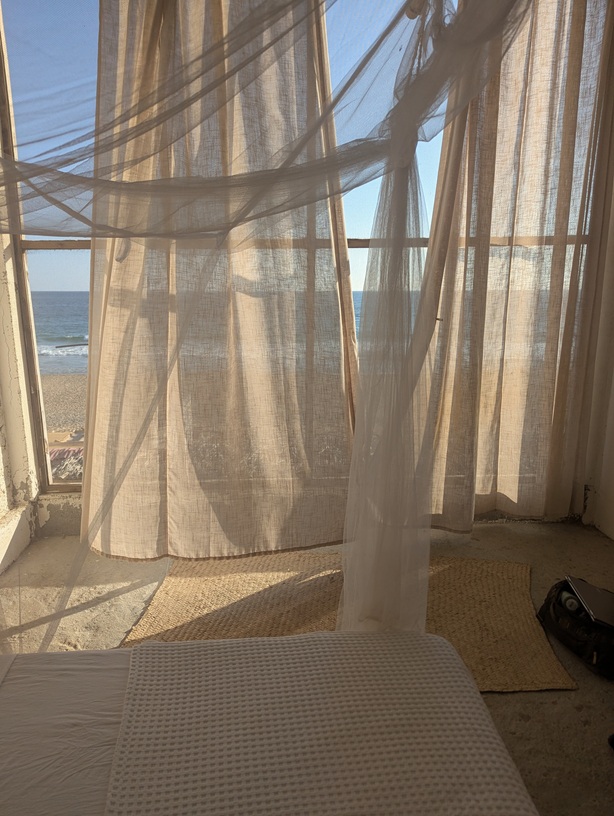
Sheer curtains lightly obscuring a screen looking out over the ocean

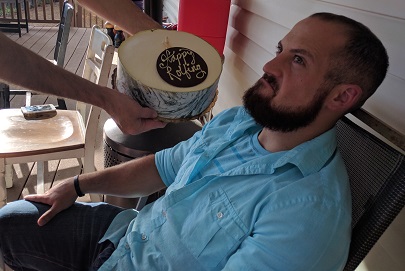
I arrived in Zipolite on the heels of a birthday party in New York. A dear friend had had a birthday weekend and in the course of that weekend my sense of belonging got turned inside out. I had an experience where my internalized story rewrote itself from “I don’t deserve to be here” to “I deserve to be here so bad it hurts”. The birthday boy cheered me on and then drove the point home by having a bunch of friends at the party reflect to me just how much of a difference my presence made to them and how I didn’t have to keep trying to belong. It was both deeply healing and also had drained my emotional tank. So when I arrived at my Airbnb with this gorgeous view of the ocean it struck me that I had a few days to just be with myself and drink in stillness before whatever madness would ensue at the retreat.

Over the few days leading up to the retreat I rested in a deeply allowing fashion. Yes, I was in Mexico for my first time. Yes, there was an ocean 50 feet away. Yes, there were a myriad number of “should’s” in my head about things I could be doing. And I thanked all of them and I opted to be rather than do. I followed the rhythms of my body, sleeping when it wanted sleep, swimming when it wanted buoyancy, sunning when it wanted sun. I ate only when I felt called to it and for those few days my system got quieter and quieter and I felt something in me begin to heal. There were trials with getting luggage to the retreat center, there was a slight maze to find the breakfast place I’d decided on trying, and it all slowly blended into a deeper calm than I’d let myself have in some time.
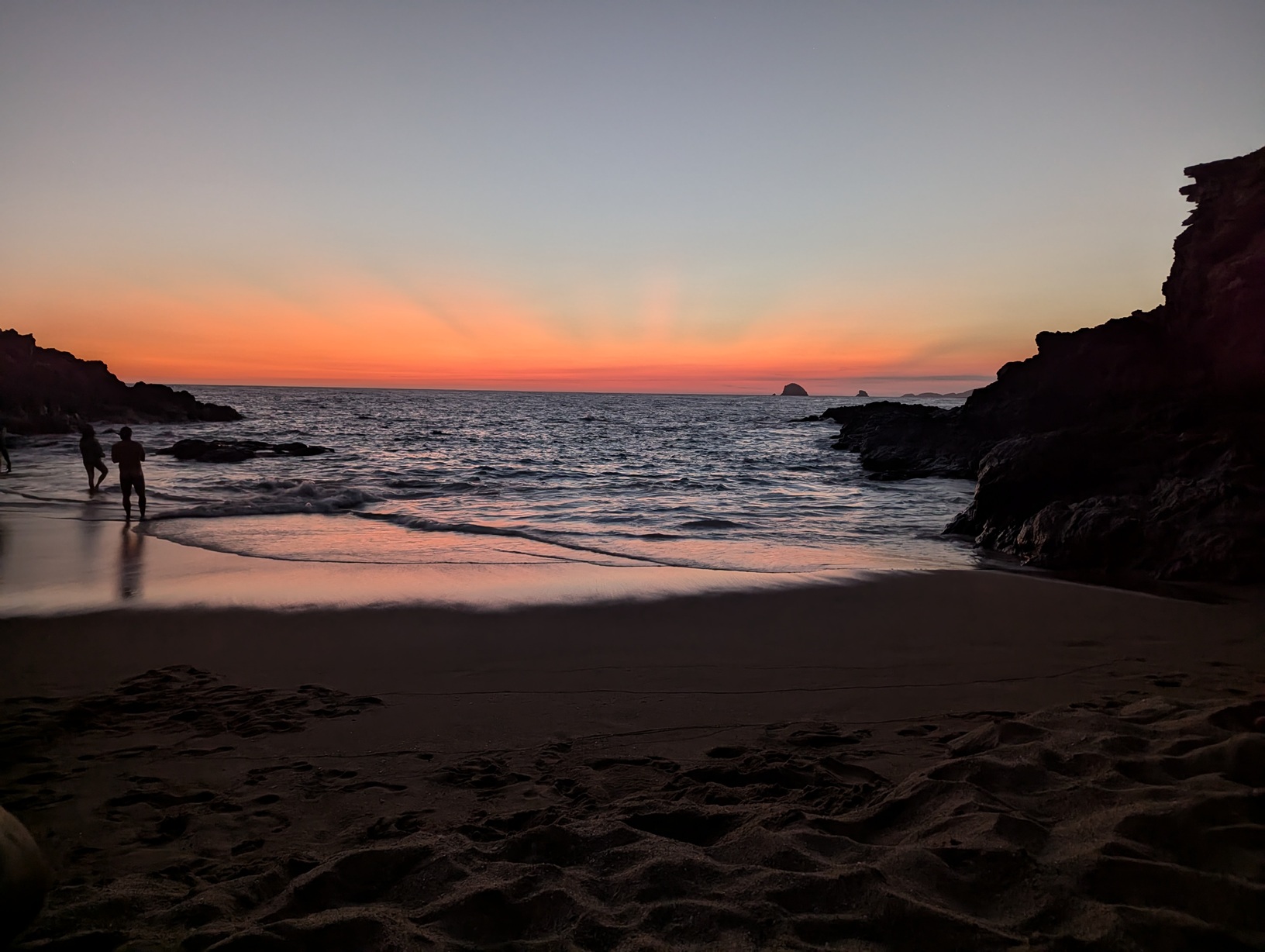
So when I rolled into the first afternoon of the retreat I was already deeply immersed in the primal rhythms of the sea, the sun, and the myriad little critters that went about their lives unconcerned with human territories. I was deep enough in the space that I was starting the retreat from a standpoint that maybe interacting with people was going to get in the way of what I was here to understand. This faded quickly as I got into the group rhythm but as I’m looking back on the experience it was also a pivotal moment in recognizing how much I could get out of just listening to the world around me at large.

Golden Nuggets

At this point I’m going to let go of the fully linear narrative because it’s hard to parse out the experience day by day. Instead I’ll offer an idea of one or two of the golden nuggets of wisdom or growth I experienced each day. I say this just also to note that each of these nuggets had a lot of support around them from the fellow students as well as the course and instructors.

Day 1 – What If…

The first night we did an exercise where we were given a bunch of pieces of paper and asked to write repeatedly from two prompts. “I am” followed by some way you perceive yourself or an archetype you embody and “I intend to” followed by something you intend for the week. The first few “I am”s were rather innocuous and unchallenging, “I am a healer”, etc. Then my mind pulled something darker “I am a doormat” and I had a choice to make. I could skip over the doormat and go on to the next more palatable thing I could write, or I could welcome the instinct and see where “doormat” took me. For the next few minutes I just let statements pour through my pen. I don’t remember what I wrote and I don’t think it matters. What did leave a lasting impression and shaping for the week though was the last card I wrote, unpredicted words that simply and complexly said “I intend to love all of it” and then compelled me to circle several times the “Love All”.

We also did an exercise called “What if” in which you were supposed to name what if possibilities for yourself then put on a posture like they’ve already happened and let the group experience you in that state. Admittedly, the exercise didn’t especially resonate with me but that night I woke up with the thought “What if I let the group run a train on me?”. If you’re not familiar with the term the essence would be what if I let everyone in the group penetrate me over the course of a single interaction. Kind of a 0 to 120 mph question and probably beyond my capacity but my mind offering up this question felt pertinent so I decided to let the idea sit and see what might be behind it. More on that in a few days.

Day 2 – So Much Love

We spent the morning working with Betty Martin’s Wheel of Consent. I’ve explored it a few times in past, but having the wheel done up in tape on the floor 10 feet wide leant itself to a deeper kinesthetic connection to the material. It’s a subtle nugget but I found my understanding deepening into embodiment and also found a well of grief for the times on the wheel when I’ve been accused of things on account of others’ triggers and had to accept not being seen in my presence.

The night’s practice was Ecstatic Body, working with sensation to stir and direct vitality in the system. In one of my pairings I was given a head scratcher tool and was using it on my receiving partner without any direct skin-to-skin contact. I was just doing my thing as best I could and the session seemed to go well but without an obvious charge to me. When we finished though my partner looked at me with a sense of awe and said “Oh my god. There was so much love…” I didn’t realize it at the time but this was the start of an increasing cascade through the week of men reflecting to me how much they saw in me and how much I seemed to be naturally offering throughout the retreat.

Day 3 – Weaving the Matrix

The morning’s big exercise was to connect as a pair with each man at the retreat and create space to check in, discuss the status of each connection, clear anything that was unsaid, and name the greater context that each individual connection was being influenced by. My first hit was surprise at how many people said they took note of my presence and way of being. The number of reflections of my loving presence grew. And then towards the end I started to notice a subtle trend of holding back. One man had been worried I might be bothered that he got a bit turned on in one of our pairings. Another wanted to get to know me more but feared burdening me with questions. The theme of holding back the last 5-20% of desire seemed pervasive and as I sat with that, my “what if” from the first night began to shift and clarify towards an intention.
By this time in the retreat I was no longer wanting to leave the center during the afternoon break. I took to hanging in the pool having delightful conversations with my compatriots. As we were reflecting on the morning’s exercise someone mentioned the sense of expansion they saw and felt in me. Almost together we came to the wording of “It’s like you’re(I’m) getting a bigger cup”. It was like completing a loop from years ago when I wrote this article.

Day 4 – ???

Tuesday night’s practice was prostate massage. This is a comfort zone for me because I have a lot of practice with presence, confidence, and steadiness as well as a better than average understanding of the anatomy. I’ll brag on myself and say I’ve been many female partner’s guide into anal play being pleasurable (a friend once labeled me an anal sherpa) so aside from the addition of a prostate this was going to be an easy space for me to embody. I was paired with a man who had expressed attraction to me earlier in the week and because I wanted room for integration after receiving I offered to give first. The session was great, I did awesome work and then a line got crossed. In the aftercare section of the session I was snuggling in to help him ground and without discussing he put his hand behind my head and pulled me in to kiss me. In a split-second decision I let my Healer archetype take the lead and allowed the kiss because it seemed pertinent to his experience. And in that moment a part of me splintered because I had specifically told this person I was in a deep exploration and feeling practically asexual at the time so I would be happy to continue getting to know each other but I wasn’t available for a physical connection. And in the way that shock can do, part of me froze up with this conundrum that had just occurred.

So with this subtle freeze and an uncertainty of how I wanted to meet this incident I submitted to receiving from this person. I requested external only work because that was the message I was getting from my body. Through the session multiple times I asked him to slow down or spread out his touch and he’d hear me and comply for 20-30 seconds and then go right back to the speed and directness he had been doing. I’m familiar with this complaint from clients about other bodyworkers who either ignore or barely meet a request before falling right back to their comfort zone but it had been a while time since I’d experienced this kind of lack of presence. After several rounds of asking and being only briefly met I found myself thinking “God damnit, is this going to be another non-attentive person that I have to defend myself from?”. I did some breathing and directing my energy, trying to lean into the resistance and finally as things started to move I found myself yelling “Stop!Stop!Stop!” and after he took hands off the charge finally started to move. What came through was a holding from a variety of times in my life when I felt threatened but couldn’t run. It was intense to the point where I ended up having to stand up and run circles around the room to burn through some of the charge. After this settled I could barely tolerate touch for the rest of the evening and retired to bed without much conversation.

Day 5 – Shame Monsters

On the morning of Day 5 the “what if” from the first night was coalescing into a resonant idea. My first Tantra teacher talks about her highest calling being to be a Lover. While this has rung true and lovely to me in an academic sense I hadn’t truly felt that calling before. But as I mulled over the holding back I felt from the group during the Matrix exercise I feel like I got a hit of why I had been called to this group. There was plenty I was getting out of the experience but I started to feel that I’d been led to this group to help support opening to a next level of freedom. So the idea coalesced into planning for the next day’s free time that I would simply offer myself to the group as a Lover. I would sit for 3 hours in the classroom and simply be there to hold space for anyone who wanted to come and receive from me. The prompt to the receivers would come from the previous week’s birthday boy “What is your deepest, juiciest desire in this moment?”. It was a revelatory idea to feel into, both exciting and scary in the ways it brought me to question my own capacity.

The morning’s session focused around shame and sharing what we’ve held back. I’ve been working with a mantra around these ideas for the last year or so “What am I trying not to feel?”. I’ve gotten a lot of mileage of out that question and it’s evoked a lot of growth and change in my internal landscape. So this was a space where I think I approached the exercise differently from some of my classmates. I didn’t find big stories to uncover but rather spun through the smaller failures and misses of the last year. What I found in this exercise was “Honoring the pause”. Where it’s easy to keep verbally spinning out a story I started noticing with more nuance the places where I could pause my words, feel what was present, and experience movement of the emotions faster and easier. I also got to be the person to break the ice for the group when it came to sharing times when we’d been the source of shame. I told the story of unintentionally coercing an ex into sex and then the distress we both experienced and talked through with each other afterwards. I talked about how our honest discussion clarified that the the experience wounded both of us and helped us both see where we could repair ourselves to avoid breaks like that happening in the future. After my share stories started to pour from the group and I got to witness my brothers deeply expressing their vulnerability and pain. Benji mentioned that often someone becomes the conduit for the group, a foreshadowing that I’ll be more aware of in the future.

There was a beautifully simple meditation at lunch where shrimp was served. They hadn’t been deveined so I sat slowly splitting the backs then removing the vein and got to show someone else how to do the same. I got several reflections of how my intentionality around food affected people watching. Then after lunch I shared some story and learning techniques with a classmate who said that shared experience had just made the whole week worthwhile for him.

The final exercise of the evening was titled Energetic Fucking. In essence this is sex but engaging with energetic intention rather than physical. I’ve done a decent amount of this with women but hadn’t ever tried it with a man. I was fortunate to be paired with one of the professionals in class, a super lovely and loving man who I’d connected with prior to the retreat. We started with me mostly receiving which went well although it took a little more attention than I’d like. No complaints, just an awareness that it was pushing my growth edges. Like an skill, directing my energy takes some focus for me to maintain engagement and awareness when I’m leaning into something new. Having a skilled and patient partner was really helpful for dropping into a deeper level of receiving and reciprocity.

When we switched and he lay down I found myself being called to offer something special. I had watched all the care this man moved through the retreat with, all the spaces he’d offered support and something was calling me to make sure he was feeling as much or more care back. I slowed down, put on an energy that said “I’m in charge now” and climbed on top. Past this I honestly feel like I dropped into a deeply instinctive space where time dilated and we emerged with something intense having occurred but only soft impressions of what had ensued. What was clear was that something big had moved for my partner. He looked at me like his heart was bursting and said “I don’t know how to hold this much love.”. I’d had multiple times this week where someone said something to me that needed a special response. So I trusted my instinct and let my mind go soft. The words that came out in response were “Don’t try to hold it. Let yourself be a river overflowing it’s banks and piece by piece let the flood waters erode your banks until the riverbed widens and widens.”.

Day 6 – Being vs Doing

Around midnight I awoke with a very urgent need to poop. I took just a little too long locating my portable bidet sprayer in the dark and I missed the gate, getting a bit on the floor and a streak on my calf before I got to the toilet. In a curious way cleaning this up became a devotional and an act of gratitude. I amused myself thinking I could also tell my partner who’d had something similar happen in Peru that now she wasn’t the only one to have pooped on herself in Latin America. At this point I was unsuspecting of what was to come, probably the most significant GI clearing I’ve experienced in my life. Over the next 16 hours I was probably to the bathroom every 15-20 minutes with diarrhea and one early massive bout of vomiting. What I also woke up with as I nursed my body through the night was various play-throughs of what it would sound like to confront the man who had forcibly kissed me a few nights earlier.

That morning we were given the opportunity to close out anything that was left unfinished with anyone. I took this person aside and told him I no longer was interested in any connection with him at this time. I let myself feel my anger as I told him about the number of times he’d made things about him rather than getting to know me and where I felt treated as an object rather than a person. I also put it to him that I’d now become the conduit for the group’s abuse conversations yesterday and had spent the night shitting my brains out because of it. I let myself seethe and then I did my best to walk away and let it go. After I returned home a friend I was telling this story to would asked if this experience had ruined my trip or soured the whole thing. I took a beat and realized that not at all, in fact the push to take a stand for myself had made this whole chapter deeply empowering and overall felt like a positive experience. I also got some self reflections of ways shadow aspects might have influenced this ordeal and a clear sense that bringing things to light rather than punishing felt like the way forward to healing.

I muddled through the rest of the morning weaving my way from bathroom to class to bathroom again. I let the group take care of me with food, meds, words of encouragement etc. I made it past lunch and got a nap which was enough to get me to 60-80% for the evening. I mentioned this to someone going into the final big session and was told “I’m pretty sure your 50% would still be pretty damn good.”. We did 4 rotations of giving in various forms. Each turn felt more poetic and meaningful as we rotated and then I landed with a friend for the final rotation. He had a simple but specific request, just attention to two places and said he’d asked everyone else to touch him there so far. The tone of his request seemed almost a little pleading to me like noone had fully met him in his ask. So for 20 or more minutes I just cradled his head and touched him where he asked to be. For 40% of this time it felt like nothing happened, and I expect this is where other rotations may have fallen off, but I chose to just keep staying with him where he asked, cycling out briefly when an edge called for attention and then back to his request. It felt like nothing might move and I just stayed with it. I again feel like I blacked out some but in the final few minutes something moved. I don’t remember what was said or done after the session, I just remember the look of relief on my partner’s face and the softening of someone who had just been unburdened.

Day 7 – Serendipity On The Stairs
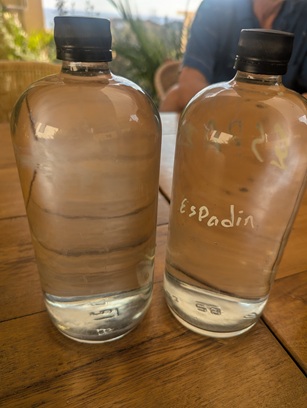
Two single liter bottles of clear Mezcal. One is labeled Espadin, the other unlabeled is Madre Cuishe

The final morning of the retreat came to a soft close with a series of staggered goodbyes and poolside conversations. I was briefly tempted to go into town or to the beach but opted for discretion as the better part of valor and continued to rest from the previous day’s ordeal. I made one small excursion halfway down the hill to buy some backyard Mezcal as a medicinal anchor of the trip to take home. Otherwise I shuffled towards packing and dipped between bed and the pool for most of the afternoon. I also took note of the comings and goings of the staff and other retreat center guests as our group began to dwindle and a group of French Canadians began arriving for a yoga retreat.

I have spent years of my life being in motion to move things forward and it was a lovely space to just be still and let the world move around me. Food and medicines showed up from the group including surprising banana types that I’d never tried before and something subtle felt like it was settling into a deeper alignment.

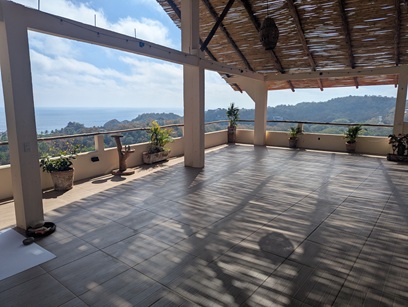
After a day of ease I was headed to my room around 8pm to pack with an intention of getting up at 5:30am to share a cab to the airport 1-2 hours away depending on road construction. As I was starting to descend the stairs to my room one of the women from the next retreat was ascending. I said hi and asked something seemingly innocuous like “how are you doing?” and she burst. I don’t remember exactly what was said but three things stood out: she was overheating and couldn’t get her body temperature to regulate, her mind was churning incessantly, and she was wondering if she could even functionally be there and if she should just go home. I made a flash decision and softly asked if she wanted support. She said yes so I directed her up to the yoga platform and got her laying down on the cool tile with a fan blowing on her.

I’ve always tried to maintain an adaptability about my body mechanics when I work and this session I was well served by my adaptive capacity. I lay belly down on the floor and cradled her head and neck to start unwinding some of the torques there. As we made progress I felt her system start to relax and she began offering more information about traumas that had occurred the last time in Mexico and some broader context of how much was stirred up for her. I continued to listen and in bits and pieces she started to shake. Being familiar with somatic release I kept steady space for her and continued to let the waves of shaking grow, gently encouraging her to lean into it but not force anything. I didn’t track our timing but just road the waves of release with her and when things finally settled it was 10pm. She asked what that was that just happened and I found myself a bit at a loss for words, not wanting to diminish the session by trying to break it down into techniques or modalities. I also had a feeling that this process wasn’t over for her but also awareness that there’s only so much the body can take on in one sitting. In all this time we hadn’t exchanged names and we finally did as we decided to exchange names and numbers for further support. She also requested a final hug before I left in the morning which I was happy to offer if she was up.

I walked back down to my room to find the lights off and my roommate asleep. So I set my alarm earlier for 5:15am to be able to get up with time to pack. Around midnight my roommate and I were both up for the bathroom and he said he’d probably not get back to sleep for an hour so I was free to turn on the light and get most of my packing done which was much appreciated to not have to wake up early and scramble to pack. I spent a half hour or so getting my luggage situated and then lay down to get another hour or two of sleep.

After a few more hours of sleep I got up for the bathroom around 3/3:30am and as I was in the stall I heard another person come out of their room for the bathroom as well. I think I coughed and after a short pause heard:
“Jason?”
“Yeah”
“Can I ask for more help?”
“Of course. Thank you for asking”
“Ok, let me go get dressed”
And with that, we found ourselves back up on the platform at 3:30am for another hour and a half.

The second session was beautiful and seemed gentler on her system this time. Stories poured out of her nearly the entire time we were working and by the end I was mostly holding craniosacral type space for her and deeply listening. It’s hard to remember the details of the session but I was clear on wanting to give her a gift before I left. With less than an hour to sleep before my cab we said our goodnights and I fell into a deep liminal space until the alarm.
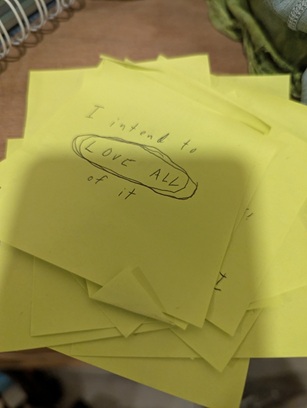
A stack of post-it notes with "I intend to LOVE ALL of it" written on the top one.

As I was gathering my things, the woman I met on the stairs came out to give me a hug before I left and the feeling of her body was like she had come home. After our embrace I handed her the stack of post-it notes I had written the first night and promised to send her an explanation that evening when I got home. We said our heartfelt goodbyes and my roommate and I joyously hopped in our cab to the airport.

The travel home was smooth yet potent. As our car wound through the Oaxacan roads to Huatulco I felt myself settling into medicine space. My roommate and I would fly to Mexico City then part ways and I would fly home just ahead of an ice storm hitting my home town. It was really joyous to be supported by a new friend who could hear me in my weird like when I came back from the airplane bathroom saying it had felt like I could feel the slipstream of the jet moving outside the tail of the plane when I went to the bathroom. I was ahead of schedule getting into Atlanta so I got on standby to get home earlier and arrived home just as the ice was starting to sprinkle.

After I landed home I sent a note to my partner-in-healing from the night before thanking her for the beauty of the time and space we’d shared. I told her the story of how I’d written the cards and offered that it felt important to share as a waypoint to acknowledge that we’re all in this together and all of us have our beauties and challenges. As she’d shared some of her challenges with me the night before, I wanted to share some of mine with her in solidarity. We had a quick exchange agreeing that the two of us felt like we had created a handoff experience, transmitting the healing field my group had generated to support and carry momentum through to the group she was about to embark upon. We decided to take some quiet space while she dropped into her experience but with an intention to reconnect somewhere on the other side. Content and warm while the ice rained down, I drifted off to sleep.

Aftermath

The day after I arrived home had turned into a work day but the ice storm scrubbed that possibility. After I finished canceling with clients I proceeded to alternately nap and watch shows through the day (shoutout to I Like Me, the John Candy docummentary and The Unlikely Pilgrimage of Harold Fry). I started writing this post within the first day and took 12 days to complete it. The aftermath of the retreat continues to swirl and it’s hard to come up with a post-retreat timeline so I’ll again do a list of Golden Nuggets of what has been alive for me since
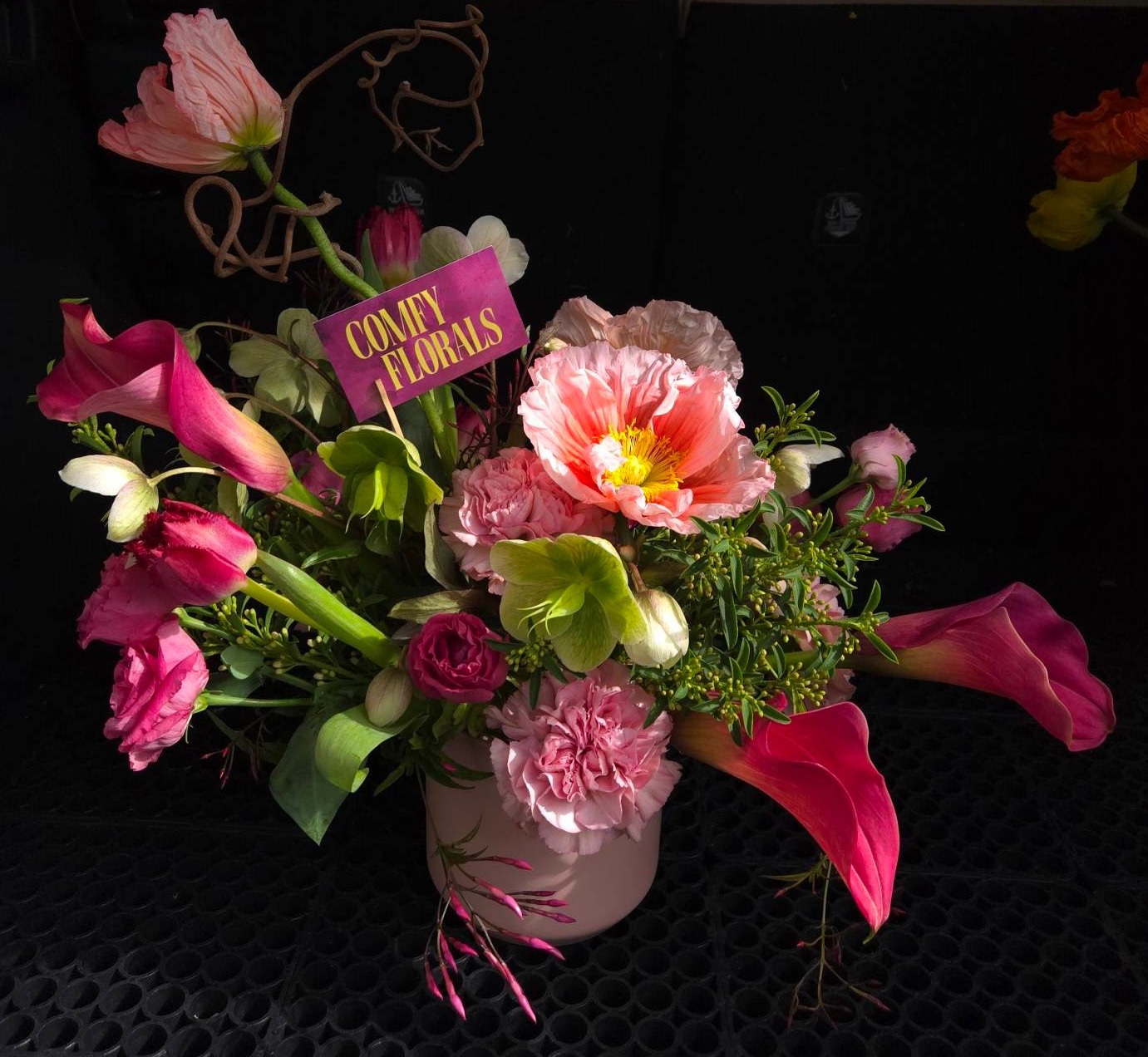
A bouquet of flowers feature pinks and reds and thin vines. A card for Comfy Florals is included in the arrangement.
  • My entire body feels softer. I started noticing it on the flights home after Mexico City that my skin felt softer, my facial features feel softer and my hair feels softer. My body also feels lighter and not just in the way that feels more significant than just the15 lbs my weight dropped over the last 3 weeks.
  • I bought myself flowers from a close friend who started her floral business, Comfy Florals, a few years ago. I love that I can give Kristy an emotional tone to the arrangement with some bits of story around the why and then sit back and watch a friend weave her magic, reveling in the way it enlivens my life rather than calling me to competition.
  • Sights, sounds, and tastes have been brighter. The Miss Vickie’s sea salt potato chips on the plane ride home felt like a revelation and all of my senses have felt sharper in general.
  • I’m coming home with an overall deeper sense of brotherhood with my fellow men from the retreat. I have no idea how or when further contact will happen but if I never see anyone from the retreat again I still feel a deep sense of belonging that transcends the personal and feels tapped into a collective sense of belonging, like it’s an energy that I’m both receiving and transmitting simultaneously.
  • I’m experiencing a lot of churn in sleep, not abnormal for me when there’s a few snow days but also it seems more than that, like I’m dreaming in small lessons. I dreamt myself as a bodhisattva, a label several folks have applied to me in the last year or so. I’ve dreamt completions of conversations and starts of new ideas. I sometimes feel like I’m having other people’s dreams but since I’ve been home they’ve all felt like mine.
  • I’m yelling at traffic more and flipping people off. In times when I’m opening up to healthier pathways for anger, the car has often been one of the places the shifting balances shows first. And whether this is something true or something I am projecting there has been a higher than usual incidence of people tailgating me unnecessarily on the highway since I’ve been home.
  • I feel more grounded in my needs and I’m finding it quicker than usual for me to decide what my next move is in a thing. I grew up prone to 2nd, 3rd, 4th, and 5th guessing myself and while I am still inclined to game options, I am spending far less time spinning my wheels and finding it far easier to pick the direction that I can best gauged and take forwarding steps towards that intention. I can also hold peaceful space with the parts of me that want to churn and spin, honoring their contributions without necessarily giving them the wheel.
  • I’ve broken off several relationships that have become unbalanced. It hurts and I am, at times, deep in the grief of relationships which ran past their ability to meet me fully or prioritized peace over authenticity, primarily at my expense. And I get to sit with the pain and savor the grief of loss while also recognizing that every time I have shed skins that are no longer spacious enough for me, I have ended up meeting better suited and brighter beings who are able to walk further along the path with me than those I had to let go of.
  • Toroidal shapes seem to be playing a role for me in my current growth cycle. I don’t have clarity on what that roll is yet but I’m noticing that the shape showed up at the birthday party, a few times during the retreat, and with my craniosacral therapist a few days later. I just get to live into the mystery of that one.
  • One of my brothers at the end of the retreat used the not-uncommon wording of “back to the real world”. I gently cautioned against delineating worlds like that as it can make it harder to carry lessons across threshholds. And reflecting that to my friend helped clarify how little distinction I see these days between the potential of healing fields and the potential of the broader world (and beyond).
  • I’ve been sitting with what first felt like a renewed sense of purpose but has been evolving into something more freeing. One of the later lines from The Shawshank Redemption has been quietly circling in my head, “Andy Dufresne who crawled through a river of shit and came out clean.” And as I’m writing this I’m recognizing the feeling of being let out of confinement (by myself) that is continuing to spool out as I process and expand from the retreat.
Advice From My First 7 Years as a Rolfer®

It’s been a little over 8 years since I graduated the Rolfing® basic training and slightly under 7 since I completed my licensure, got laid off, and made an abrupt transition into “full time” at about 2-3 clients a week at the time. Last year I completed my Advanced training and assisted a Unit 3 training for the first time and it’s had me thinking about how much has changed since I first stepped into a classroom in Boulder. I’ve reached the point where there’s no thought to calling myself a Rolfer anymore and even on the days that it just feels like work I still wouldn’t want to be doing anything else.

I’ve had my first Rolfling (client who decided to become a Rolfer) and possibly a few more in the making so I’ve been thinking about some of the advice I can offer that I feel really helped me become the Rolfer I am today. It’s not a comprehensive list, but a number of salient points I’ve found useful along the way.

Worry Less About Fixing and More About Learning

It’s challenging to remember when someone is paying for your help but one of the things I wished I’d realized earlier is that it’s not incumbent on me to be everyone’s savior. In the course of my career I might seem like a total wizard to some people and a charlatan or waste of time to other people. In training it was easy to watch an instructor be magical and think that that was what I was supposed to produce in the next hour. And in hindsight what may have held me back in my first few years was the tendency to try and push harder when that sort of magic wasn’t happening.

Having recently assisted a training for the first time, I think that ideally Rolfing training would be something like a 4-year degree. But for a variety of factors it’s not reasonable to run things that way so what we get is a training that teaches enough enough to be dangerous then sets us up to spend our early years getting our “finishing school” from our clients and continuing education. Even being told “the 10-series is what you do for 5 years or until you know what you’re doing” is easy to lose sight of in that moment when you have hands on a new client who’s coming to you for help and your training didn’t tell you exactly what to do in that moment with that client’s particular issue.

Looking back, and in working with my first Rolfing mentee, I think one of the things that most served the Rolfer I have become at this point was learning to back off, stop trying to fix, and focus more on learning. Making my Rolfing practice into my Rolfing *Practice* as it were. When my job became not to fix in the moment but to be effective enough that people came back (when appropriate for them) that was when I think I started to really become more effective. Pacing things not only to the client’s rate of change but also to a level or touch where I could work but still listen an gain understanding of what was going on. So that has become my primary stock piece of advice to new Rolfers which I also found echoed to some level by my advice to first time dance students.

Your primary job for the first 5 years is not to fix people. It is to be effective enough that people want to come back so you can continue to learn from working with them.

Sweat the Small Talk

I started Rolfing training as an avowed introvert, quiet and shy. When I share with clients that this is where I started from, most having little to no trouble believing this (although that’s starting the change lately, *happy dance*). They are far more likely to have a hard time believing I’ve been a swing dancer for 15 years and taught, competed, and ran my own dance studio for a while. So when I say that I’ve found being chatty with clients is a valuable thing, it’s a pretty big statement from where I started.

I think the early stages of Rolfing training made it easy for me to get focused on the client’s body and issues therein. After all, as Dr. Rolf said, it is the part we work with because it’s what we can get our hands on. People tend to show up in my office because they have big issues that have been affecting their life for a while and it’s easy to hang up on those. But one of the things I’ve realized over time is that if I focus too much on the current issues it becomes hard to see why we’re doing all this work and where it is going for the client. Understanding my client’s strengths and resources and joys has proven every bit as important as their problems and it takes a certain level of trust and familiarity to share any of those.

Making small talk with clients (or bigger talk), chatting about their day, their likes, what they or their kids did this past weekend, etc. has been a major source of insight that I didn’t expect it to be. I find that the more levels I’m willing to work with my clients on the more effective I’ve been able to be. Since it’s impossible to really know a person from an intake form I find myself that I can learn and connect more with my clients in a conversational”rolling intake” way not unlike getting to know another human being in any other situation would. The more I’m willing to roam through subjects with clients, the more I get to see the bigger picture of who they are, how their issues and activities and woes and joys are influencing their lives, and very often in conversation I find words or ideas or other hooks to help empower them in their healing process (and I find plenty to help heal myself as well). Sometimes the conversation itself is an important part of the healing. And let’s be honest, it can be a weird thing to meet someone, get in your underwear, and have them work on you; carrying on a conversation like a normal person often seems to help with the process of normalizing the newness of Rolfing for a lot of clients.

When in Doubt, Ask the Client

Being unsure what to do seems to be a pretty common thread in my first few years and strikes me as likely to continue showing up pretty regularly in my practice for the rest of my life. In theory unless I’m working with another Rolfer, I’m the person in the room most likely to be the expert on Rolfing but that still often means not knowing. I’ve often seen situations where Rolfers seem to think they need to know what the client needs as a default. “How do I know when to do X?” is a common question I’ve heard in classes and I think it speaks to the uncertainty of working with bodies and human health. I’ve found that, for me, the simplest and most powerful solution is to own my uncertainty, say “I’m not sure” and then ask the client for input. After all, the client is the expert on being themselves and have been figuring out and meeting their own needs for a lot longer than I have, so why not use them as a resource?

I usually give the client an out by telling them”You’re paying me to figure it out” if they don’t have a clear preference or sense of which direction to go, but sharing ideas and asking for client input helps make the process collaborative and a team effort for the their health. It invites them into conversation with their body and offers them some practice with better defining their internal landscape. It makes my job a hell of a lot easier than trying to know everything all the time and it gives me more information for my own learning process. It’s humbling and humanizing to say “I don’t know” but I’ve found it’s almost always improved on my results and helped keep my ego from getting in the way of the work.

Get a Mentor

There is a lot to learn in this little niche therapy of ours, and fairly likely still a lot more than I’m aware of at 7/8 years in. My de facto mentors for the first few years were my first Rolfers, Bethany Ward and Larry Koliha. I knew going into my first 10-series that I was interested in being a Rolfer so Bethany gave me a behind-the-scenes view of her processes as we worked together and it was incredibly helpful and something I’ve carried in to working with potential Rolfers. Larry and Bethany are also faculty at the Rolf Institute which meant they were full of helpful thoughts on preparing for the training or reigning in my occasional oversteps in practicing (I got scolded for trying nosework on a friend before I had done any training).

It was a real boon to be able to have someone I could ask when I got stuck with a client or when a session had a detrimental result or even when I just felt like a client’s issue was out of my depth and it was better to refer them out to someone more experienced. At the same time, I had Larry’s advice that often the difficult clients are the ones you learn the most from as a guide to work on staying calm and continuing to hang with the moment when I was having trouble with a client or with my own body. And being able to take classes from Larry and Bethany and receive work from both of them over the years has been a great source of new-to-me ideas and feedback on if I’m getting the right idea or if I missed the point of something they were teaching.

And ultimately having mentors has also provided me a metric for realizing that I can be both different and awesome. One of the things I’ve noticed over time is that the people who excel in various fields often seem to do so in part by being deeply themselves in the process. Being able to compare notes with Bethany and Larry and the occasional shared client helped me realize that I didn’t have to always use their ideas to be effective and on occasion I saw something for a client that they didn’t and vice versa. Knowing and working with them gave me a model for success in this trade and over time also helped me realize that my success didn’t have to look the same way as their success.

Get a Colleague

I think perhaps even more important than finding a mentor is finding a peer with whom you can connect. Someone who you feel on an even playing field with and free to talk about your experiences, exchange work, challenge each other, be a shoulder to cry on, and grow in unison (if not always in the same direction or at the same rate). A good colleague provides a safe space to grow in a different way than a mentor and can also help be a great yardstick for our own progress.

One of the most valuable resources to me has been my first client-turned-Rolfer, Lisa Barr. While we started in sort of a mentor/mentee relationship at first, we transitioned pretty quickly to trying to be more like colleagues and equals and both of us feel we got far more benefit from that relationship in the long run. Lisa knows me far better than any other Rolfer because we make time to trade sessions, get coffee after the session, and spend time talking about life beyond the table. This close friendship not only means we have a strong supportive colleague but also gives us additional space to grow and often helps us connect the dots and do deeply transformative work with each other. I believe we are often able to evoke change with each other that more experienced practitioners couldn’t or didn’t because of the additional layers of trust and familiarity that we have built with each other.

Get a (Really Good) Therapist

I feel like I got very lucky with the therapist I started working with just after I finished Basic Training. I’d be dumped HARD during my Unit 3 and came home incredibly distraught and finally ended up working with the therapist who a doctor friend had been advising me to try for several years prior. Frank has been my go-to therapist through the growth of my career and someone I still see off and on as my life, body, etc. continue to shift and grow. Working with him has not only improved my life but it has made me a better Rolfer.

While I started from a place of being a pretty good listener, having a therapist to model on has provided so many small and large pieces towards presenting both a more compassionate and more open model of listening for my clients. My early few years working with Frank involved a lot of anger and his willingness to simply sit with it and advice to “get comfortable being uncomfortable” has, I think, made me a far more accessible therapist to my clients. I’ve learned how to sit and simply hear their stories and when appropriate share my own stories or my own thoughts as opposed to jumping to giving advice or trying to fix things for a client.

And in a more general way, I think it’s an important aspect of presenting balance in ourselves with our clients. As I keep my own personal self developing, I keep myself relatively sharp for helping others develop as well; plus having a close relationship with a therapist has been useful when I need to get a referral to a psychologist or psychiatrist for a client.. And as a colleague recently said to me “I keep going to a therapist so that I don’t have to”.

You Get To Co-Create the Context

It took me a while to recognize it, but the average client coming into my office doesn’t seem to know what to expect from a Rolfing session. Rolfing can be hard to describe even if you’ve had it and it seems to almost defy the “elevator speech” level of communication. So even if they’ve been referred by another client, many new Rolfees seem to show up not knowing what the experience is going to look like.

While it’s easy to view this as a detriment, I have found this can be spun as a strength of the work as well. With minimal pre-conceived notions, it becomes possible to set the stage for our work in a different way than if someone is going for a spa massage or other therapeutic intervention more oriented to them simply receiving care. I have found this ability to re-contextualize our work together as something collaborative, exploratory, out-of-the-box, and holistic is of great benefit and helps go beyond just “fix my pain” to allow room for the sort of transformative work that drew me to Rolfing in the first place.

I aim to meet my clients on a person-to-person level first and foremost and to work as equals rather than play into certain professional roles and expectations. It works for me and it seems to work for the majority of my clients. I’ve seen other colleagues work it different ways that serve them where my strategy wouldn’t fit. But in essence, you get to set the tone of the relationship you want to create with your clients and the more you take advantage of that, the more your work starts to look like you which I generally seems to make the more powerful both for Rolfer and client.

It’s OK to do Free Work

At times, offering free work has been one of the best tools to create a learning environment for myself and to be effective with clients I might not otherwise have helped. Offering free work significantly cuts down the anxiety around producing results for money which helps me feel space to experiment and take risks I might have talked myself out of. Sometimes a client shows up with an issue so outside of my experience that I have no idea if I can help but I want to try and see both if I can help them and if I can learn something. For instance, when I had a lactation consultant start sending me infants with tongue tie issues I spent the first few months doing free work on babies. This allowed me to create training space for myself and the freedom to experiment helped me to play with tactics that were both new to me and seemingly outside of what other tongue tie workers were doing.

Offering free work has also been a great way to smooth things over with clients on the rare occasion where something goes wrong from a session. This happens occasionally when a client struggles with integrating a session or every once in a while when I make a mistake. I try to first do no harm, so when I feel I’ve done something that adversely affected a client, it helps me stay in integrity with my intentions to either return their money for that session or offer free work until they feel better. Some of this is self soothing but it also goes a long way towards restoring trust with clients and being clear that we are working for their betterment and it gives me a chance to get hands on them again and try to learn where things went sideways. The most memorable case of this working for both me and a client happened when I was working with a first time client and had one of her ribs pop out of alignment. She called me the next day saying she was in pain and would be unable to come back, so I offered to do free work until the issue resolved. I spent 6 weeks doing free sessions for her until it felt better but I learned a lot about ribs and haven’t had that happen since, plus she became one of my best clients for a number of years.

Be Careful With Discount Work

One of the things I’ve learned over time is it’s equally important that my clients are covering my needs as that I am covering theirs. At the base level this means that I need to get enough money and/or emotional return on my time and energy to make doing work sustainable. While offering discounted work is occasionally valuable as a marketing or accessibility tool it can also be fairly destructive to the sustainability and quality of my work and client relationships.

I’ve run Groupons twice in my earlier days and found that those kind of steep discounts invite a lot of clients only looking for more discounts. I’ve gotten a few wonderful folks out of each one, but not at a much higher rate than what was already coming through my door by referral. At the same time Groupon tended to bring in a higher than average level of people just there for cheap work and less engaged in the process in general. Additionally the ones who wanted to stick around but only if I kept offering them a discounted rate tended to be the ones frequently going on fun weekend outings worth several times the discount they were asking for. While I don’t fault anyone for trying to save money, it typically seemed like the issue with these cases was one more of priority than true need for a discount which ended up feeling to me like a de-valuing of my time and effort. Noticing this effect has also made me very mindful of making sure my providers feel fully valued when I go to other therapists/practitioners/artists/etc nowadays.

So my early years pricing advice has been to set a price that feels good, and maybe a little uncomfortably high in the sense that it gives you space to grow into. Start from the market price for Rolfing in your area and adjust up or down to find that sweet spot for yourself. I don’t think money is everything but it is the most easily quantifiable and I do believe it communicates something about how people value my time and effort. What I found running Groupons was that doing a lot of work at a steep discount tended to affect the quality of my work across the board. So at this point I’m very mindful of offering discounts and making sure that I take care of my needs in a sustainable fashion that keeps me doing great work for my clients and myself.

Start with 3s When Strategizing and Pitching Work

I started out doing a lot of one-off sessions at dance events so I didn’t get particularly tied to the Ten-Series sales pitch but over time I’ve learned that it’s not where I prefer to start with clients. And clients coming in for the first time tend to find the idea of committing to 10 sessions upfront for a therapy and a person they have never tried to be rather daunting.

3 sessions is a much more manageable amount to consider for trying something new and I find it is typically enough for most clients to decide if we are making forward progress towards their needs and goals. For the last few years I’ve told new clients to “give it 3 sessions and that should give you a good sense of whether or not we’re making forward progress and/or if we need to change directions.” After a year or two working with that number as a proving ground, I’ve found there’s better client engagement and return, more people helped, and I’ve gotten much better at honing in on my clients’ core needs. Plus I find it typically takes 3-5 sessions to really start establishing a trust and rapport that allows for deeper work so when clients stick around past that point we usually get to dive into even cooler territory. Or if a client and I aren’t making some progress in 3 sessions I’m much better informed by then to be able to suggest someone or something that might be more helpful to their needs.

Strategise/Be Opportunistic About Classes for Advanced Training

My practice is in Raleigh, North Carolina in the USA. In the time I’ve been in practice there have been just a handful of RISI credits offered within even a day’s driving distance. When I finally got around to planning for Advanced Training I found myself scrambling to get the required prerequisites done in time. I actually ended up finishing my prerequisites mid-Advanced by flying to LA for a class on my way down to Brazil for the second half of my Advanced Training.

So generally now I recommend to newer Rolfers that they keep an eye out for the workshops near them, try to spread out the CEUs you need to get through RISI for your Advanced Training. If you live in Boulder or Seattle or the like it’s probably not a particular issue. But if you live a couple hundred miles or more from the nearest place where RISI regularly offers classes then pay attention to when they come up and try to maybe take one class every year or two. This will help you be ahead of the Advanced Training game when it comes time to cash in those prerequisite classes.

Titration and Pacing

One of the first pieces of advice I got from Bethany when I did a mentored session with her was to slow down and find the first layer of resistance rather than diving straight to as deep as I could do. I started out with a “Get in there and FIX IT” mentality that, in hindsight, was partly driven by a desire to speed through my own discomfort with my client’s expectations of relief (ESPECIALLY in the cases where I got a client who’d been to a much more experienced Rolfer elsewhere). It took a number of years and a fair amount of confidence and self loving growth to reach a point where I could just hang out at a client’s pace of change and feel (for the most part) comfortable with the discomfort of “they’re not feeling better yet and I’m not sure if they will”. The more I became comfortable with not having to ‘fix’ a client and just helping them evoke change at a pace that worked for them the more effective my work became. And curiously enough, the less I rushed things, the more rapidly they seemed become available to shift.

Pacing for myself as a human and practitioner is important as well. When I first started, two of the local Rolfers were closing their offices and I expected to be flooded with clients. In hindsight I’m glad I ended up getting very few of their people coming to me because it gave me time for my body to adjust and strengthen with this work. It made for some tough financial years in the middle but I believe that taking 5 years to reach a relatively full practice helped me be a better kind of strong and stable for this work.

Learning to pace and spread out my learning has been of great help. The desire to know ALL THE THINGS is certainly there for me at times and occasionally it’s worth cramming a few classes together. But it’s worth remembering that sometimes our clients integrate the most when we take our hands off of them. And similarly, we as practitioners and people integrate similarly when we just settle in and do the work where we are and with what we have at that moment.

Go Beyond Fascia/Try Things/Make It Your Own

I didn’t plan it this way, but looking back at the last 4 or 5 years of Continuing Ed for myself, I did as much learning about tissues other than fascia, as I did taking more traditionally Rolfing/fascial work classes. Nerve work, scar tissue, visceral, and deeper cranial rhythms all helped me refine my touch, expand my range, and take my fascial work deeper as well. Plus watching the various instructors for these courses helped gain a broader idea of how many directions this work can go and how much you can personalize it to your own knowledge base, body type, and way of being.

I started to define Rolfing, at least for myself, as something more of a philosophy than a technique. Most of the experienced Rolfers I know seem to have borrowed pieces of other work that isn’t strictly from the original Rolfing tradition and most of them do work that is in some way distinctly reflective of who they are as a person. As I observed this, I began to think of Rolfing less as a tool and more of an organizing principle for how I arrange my toolbox and how I go about using those tools to help someone (ordering of interventions, seeing beyond the surface, etc.). Thus, to to me, Rolfing becomes not a specific product or service that I offer but rather a context for offering my best therapeutic self to help people, which is part of how my work began to reflect me as a person.

Get Some Work for Yourself

Simple enough but so easy to get away from the habit. Believe in your own product and get Rolfing (and any other work that calls you) not just when you need it but before you need it. Having gone through phases of both I can say I think my clients’ results are markedly better in the periods where I’m spending or even overspending on self care compared to the periods where I wasn’t getting any work for 6 months or so.

Make Room for the Work to Change You

When I started down the path of this work, I oriented to it strongly as “I want this so I can do good things for others” What I failed to predict in those early stages was how much the work would also become a tool for letting the world do for and change me. At nearly 10 years since my first Rolfing sessions, I’m suddenly encountering the idea from multiple sources that the spiritual/personal growth work that we do is not just for ourselves but for all of our relationships and our clients as well. And after spending most of my life orienting as a giver, I find myself learning some really powerful lessons about how much I’m capable of receiving as well.

When I started training as a Rolfer I was on antidepressants, living in a construction zone of a house , and unconvinced that I had much value in the world. I was rather painfully shy, afraid of judgement, and felt stuck going down some family paths that I didn’t even realize I was on. Last year one of my colleagues told me when she had first met me seven years ago she was sure I was going to be a pain in her ass because I was dreadfully unhappy and couldn’t see it for myself.

Yesterday the same colleague told me she’s looking forward to the day when her children reach the point of change that I’ve gotten to lately. I’ve also had comments from pretty much every Rolfer I’ve worked with long-term about how much my body and way of being have changed over time. I still have the rest of my life to grow but I’m significantly happier, healthier, and more fulfilled than I was before I entered this process.

As I changed, my work changed and grew. The more my energy and way of being improved, the better my clients’ results got. In a grand sense, I don’t think of this work as fixing or creating a change in someone, it’s helping them (and ourselves) remove or work through the roadblocks to being our best, happiest, lightest selves. The more we allow ourselves to soften into our hard spaces, the more we learn how to offer similar space to our clients, our friends, and ourselves. So regardless of where you start from, probably my biggest advice to new Rolfers is to be open to the work changing you, challenging you, and bringing you to places in yourself that you may not have been able to imagine when you walked into your Unit 1 training.

Adventures in Assisting – UC 5.16 Week 7

The final week is done of my first Rolfing® training assist. It ended up being a big push to the end getting in as much as I outside of class while mostly wrapping up in the classroom. We wrapped up a day ago and I’m finding myself deeply grateful for the experience having learned a lot and set up a decent base for assisting again (in fact I’ve already got one loose offer to assist another instructor sometime in future). I’m also very grateful to friends, old and new, in the swing scene here who’ve helped me feel at home, and kept my nights busy with delicious food and equally delicious dancing.

Day 43 – September 26

uc516_day_43_kakes_dawn_tributeMonday came on fairly bright and early. The legendary Dawn Hampton had passed the night before and I was on and off Facebook through the morning checking out the tributes, stories, and videos of this incredible human.
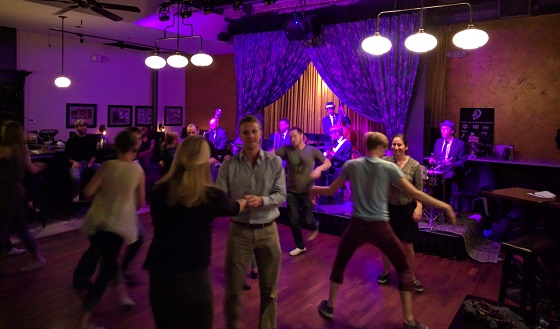
In class we spent the morning reflecting on our 10 series clients and what sort of results we had gotten with them. Watching the reflective process for the students was great particularly since I see the 10-series as being a strong self-teaching tool for Rolfers early on and throughout our careers. Session 9 with the 13-series clients followed with a little bit of a bittersweet feel moving towards the end of closure.

After class I caught a ride from Neal over to Heather Starsong‘s studio where I got a personal movement session. We worked a lot on spinal mechanics and getting my axial diaphgramatic structures relaxing and working together. It was a beautiful session and is probably going to be processing for a few months to come but I then got to have a 2 mile walk down to Kakes Studios for the Boulder Swing dance as a way to integrate. Had some great dances again with a nice tribute to Dawn then a couple of friends invited me over for Sazeracs and some chat time before taking me home probably later than was best for me to be out.

Day 44 – September 27

UC516_Day_44_Dancing_at_Baurs.jpgTuesday came on bright and early with a trip down to Snooze for breakfast then more 10-series presentations and my second demo session with my post-10 client. The afternoon rolled into mostly students trading sessions with each other which provided a nice break from holding space for outside clients and generally feels like we got a more relaxed energy and got to see the students interacting a bit more openly as practitioners.
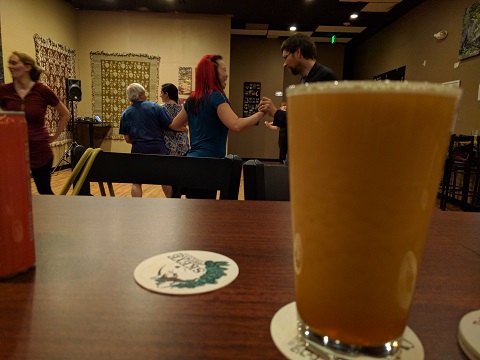
Dancing this night took the form of a drive (or being driven) down to Denver for Joe Smith and the Spicy Pickles at a restaurant called Baur’s. The band was really damn good and it makes me wish we had the sort of infrastructure in Raleigh/Durham to support larger bands having weekly gigs like this. I got to meet and dance with a few new dancers I hadn’t run into yet and we headed home tired but satisfied.

Day 45 – September 28

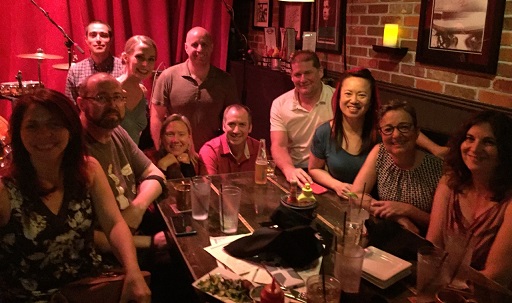
uc516_day_45_skeye_brewingWednesday night saw me up early for the last session of my 3-series trading with Neal. The session with Heather had given me a few ideas of spots to work on and Neal incorporated that info nicely into a nice wrap-up session for our work together.
We spent the morning in class trading tips and tricks that we’d picked up along the way and watching Neal’s final session 10 demo. The student’s 10th sessions in the afternoon were again sort of bittersweet thought mostly sweet as the students closed out with these clients. I’m not sure if it was because they’d done movement as well or because it was closer to close or just luck of the draw but this round of closure felt more open and warm with gifts and cards exchanged and the like.

After class, Neal gave me a ride up to Skeye Brewing on his way home and stopped off to grab a beer with me before heading on. When we arrived, the beginner lesson for the dance that night was still going on and we got to talk a little bit of my philosophy for teaching dance. The crowd for the dance was on the smaller side but also nicely intimate and a lot of good dances (and a few brews) were had. I caught a ride home with one of the local teachers and had a really nice conversation about dance pedagogy before being dropped off at home and promptly crashing.

Day 46 – September 29

uc516_day_46_waterloo_group_photoBy this point in the week it was beginning to feel like a rather intense, though worthwhile, haul through a lack of sleep. It wasn’t really intentional, just between the work with Heather and Neal I think we’d reached a sort of critical mass where some of the body shifts were interrupting my sleep for a bit.
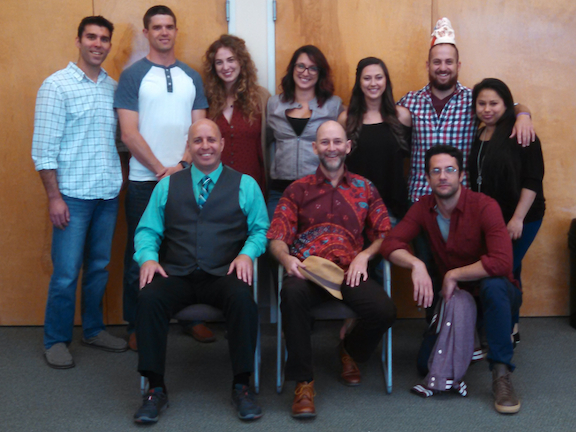
Undeterred though we kept rolling on with class which was all about the final post-10 sessions today. My final session with my post-10 client came together really well and kind of made me wish I were closer. She asked if I had a card and I had to confess that I lived half a country away but would do my best to help put her in touch with someone who might be useful to her locally. Following class about half of us went over to Asher Brewing for a couple of beers and some conversation. Several of the students have family or significant others coming into town at this point so we got to talk a bit more about those folks and life beyond the classroom.

And reprising the start of my dancing during this course, some of the local decided to take another trip to Waterloo in Louisville for some Balboa dancing. The picture above is missing a good number of the new and old dance friends I’ve made here but I think it tells the spirit of this group well and I’m deeply grateful for the welcoming arms of the swing scene here.

Day 47 – September 30

uc516_day_47_class_photoGraduation Day!

This was another early morning for myself and Neal as we had individual student evaluation interviews to do. Everyone passed with plenty of room and we got to talk with each student about their strengths, their challenges, and what we might recommend they pursue next in their development. Energies were higher overall than they had been in a while which I think is a testament to how much work goes into training as a Rolfer and how much of a relief it is to cross the finish line. The closing ceremony and graduation went great and then I crashed hard and just went to lie down on the floor a bit.

Following a reception at RISI, the class and families went out to Element Bistro for a drink. Neal and I hung around for an hour or so then headed to J&L Distilling for a final drink and debrief ourselves. When I had first booked my flights, Neal and I had planned this time thinking we’d need lots of time to talk out what had happened in the class but because we’d kept open lines of communication and feedback the whole time there really wasn’t much left unsaid and we spent the time instead talking about my heading to Boston and Neal’s upcoming trip to Peru.

Final night’s dancing in Colorado came courtesy of a gypsy jazz band called La Pompe playing at Brik on York which was a fancy pizza place in downtown Denver. A local dancer gave me a ride down and instead of pizza I ended up ordering a charcuterie plate that took most of the night to finish off. Had some great dances, especially in the second set when patrons started clearing out and we were able to move some tables and dance at the foot of the stage. One thing I’ve been noting a lot lately is how much of a difference it can make to dance with an audience around. At a standard swing dance everyone is kind of just doing their own thing, but at a restaurant or bar, dancing kind of makes us part of the entertainment and it’s been interesting to note how much that adds to the experience for me and kind of eggs on experimentation and play.

I got back home around midnight and tried to get to sleep fairly quickly for my flight the next morning.

Day 48 – October 1

uc516_day_48_denver_airportThe last day in Boulder dawned a bit earlier than I would have liked, but with a 1pm flight to catch, an hour+ bus ride to get there, and the unpredictability of the lines at DEN, I decided it would be best to be up at out early. I had hoped to take my host to Snooze and to get myself a flight of fancy pancakes (still a brilliant idea) but by the time we arrived at 8:30 the wait was nearly an hour and would have been pushing it on my comfort zone with the time.
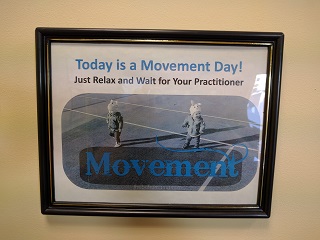
So instead I just hopped the bus to DEN, barely made weight on my bags stuffed with goodies from Colorado breweries and distilleries, and settled in to wing my way to Boston for Tinkerbal and seeing some dance and Rolfing friends I haven’t seen in quite some time. Today’s photo is from a little space in DEN above the trains in Terminal C that I’d just never noticed before, keeping a bit with this whole trip’s theme of noticing details and continuing to learn.

I landed in Boston around 9pm, caught an Uber to the dance that night and surprised the hell out of a few old and dear dance friends by being there. It was a lovely reception back and I wish I had gotten photos of the silly lobster dance contest, but I decided to just enjoy it rather than being a shutterbug. Staying the night with an old dance student of mine who lives near the venues and I slept in on Sunday longer than I have in a while.

Conclusion

It was a really wild ride getting to this point, having just completed my Advanced Training and getting asked to assist, working out how to make it fit with my current homeless state, and getting better insight both into how much I do actually know and how much there still is to learn in this work. I’m grateful to Neal for taking a chance with me and to all the students for their patience with both of our learning curves and for their presence and energy in class. And probably most importantly, a huge congratulations to AJ, Chris, Drew, Haley, Katie, Kyle, Monica, and Tiffani on making it all the way to being Certified Rolfers!!!

Adventures in Assisting – UC 5.16 Week 6

Week 6 down. Almost done with my assisting a Unit 3 Rolfing® training for the first time. Getting deeper into closure territory, final touches, parties, and getting in as much hiking and dancing as I can. It’s also the final week I have a car rented meaning I’m enjoying that freedom as much as I can before I go back to hoofing it, busing it, or bumming a ride for the final week.

Day 36 – September 19

uc516_day_36_movement_3Monday came bright and early with a promise of the final movement session for the 13 series clients. This puts us firmly into the territory where both clients are past the core sessions and moving into integration and closure. As a big proponent of movement it’s been nice watching the students shift from sort of loose understanding of how to build a movement session to a much more confident assessment and directing of the sessions with their clients. This was also Ray McCall’s last day in class assessing Neal who passed the test just fine.
I went for my own movement at the end of the day with a trip to Kakes Studios for dancing. Definitely a more tired day than it has been at times, but good to be out all the same and a little bittersweet knowing I’ve only got a few weeks left to get out dancing and connecting with the Boulder Swing folks.


Day 37 – September 20

uc516_day_37_element_bistroToday was my final session with my demo client for the 10 series. It finished up in lovely fashion and I’m really happy with the work I did. That said, it’s also a little bittersweet finishing up with someone who’s been really fun to work with and a great reciprocal learning relationship for my first assist. It’s also going to be curious as I will be starting Thursday with a new post-10 client who I’ll see for 3 sessions. Having watched how it can be really challenging to have someone visit a student towards the end of a training I figure it will be curious to be trying to integrate a new relationship on the tail end of a long series of learning already.
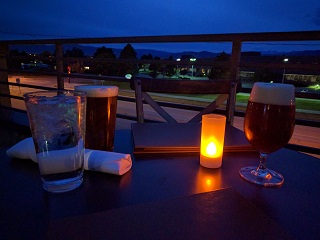
After class Neal and I went out for drinks (and me for dinner since I’d skipped lunch) at Element Bistro near the Rolf Institute. We sat out on the rooftop bar overlooking the start of the mountains and it’s really good to have someone like Neal to work with and be able to check in throughout the course making sure we’re both on track and holding it together.


Day 38 – September 21

Photo taking broke down today. I’m actually a bit surprised that I made it this far without a miss but today happened to be the day for it. Today actually turned out to be a bit of a wiped day for me. A good one for the students as they took their 13-series clients into session 8. I actually don’t have a good recollection of this day other than remembering that I had really intended to go to a dance at the Arvada Tavern but ended up just crashing out early instead.


Day 39 – September 22

uc516_day_39_barefoot_jazzToday I met my post-10 series client for the first time. I was still dragging pretty badly from the day before and feeling like I wasn’t going to do very well working with her in the morning. By the time she came in and we got to work though I had found my groove again inside of about 15 minutes. It was particularly nice to feel less constrained to the 10-series and a bit more free to work as needed. I do of course still love the 10-series for what it is, but in the teaching context there’s a certain feeling of pressure to do work in a specific context. Getting back to working with an already Rolfed body was a nice change and I think the session came together really well. For their post-10 series work, most of the students are working on each other which also adds a nice looser vibe to the room at the end of the day.
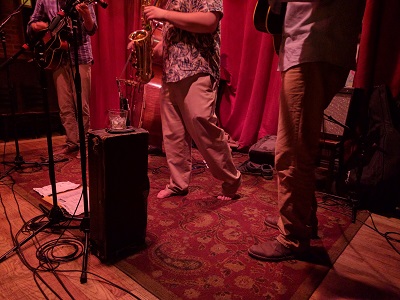
For dancing that night I met a couple of Balboa folks at Waterloo in Louisville. Jeremy Mohney was playing again, we had some great conversations about dance and teaching, and I made plans to go hiking in the morning with one of the dancers. Towards the end I noticed that Jeremy was playing barefoot and being a proponent of minimalist footwear, I figured that would make a good picture for the day.


Day 40 – September 23

uc516_day_40_ribs_n_brisketI woke up this morning to a text from my intended hiking buddy saying she hadn’t been able to get to bed until after 3am and would be in no shape to go hiking that morning. Not to be deterred, I set out for breakfast followed by a short but satisfying hike up and down the Dakota Ridge trail at Sanitas Valley.
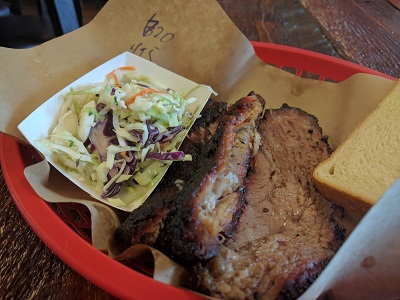
Following the hike I headed over to a Texas BBQ joint I had been meaning to check out called Wayne’s Smoke Shack. Because they are only open for lunch 5 days a week until they sell out, it had been a bit challenging to find time to get there, but it was well worth it. Easily the best brisket and ribs I’ve had here and some of the best crust I’ve had on barbecue in most places.

After Wayne’s I took a trip out to the Celestial Seasonings tea factory for a tour and to pick up some Nutcracker Suite tea for a client and for the office. Being a seasonal holiday tea it’s hard to find other times and seemed to be the office favorite, so that and about a half dozen other teas are coming home with me. In addition I’d say the mint room, while delicious smelling, was also rather burny just to stand around and the tea-dusted cement floor seemed like one of he slickest potential dance surfaces I’ve been on my whole trip.

I followed up the tea tour with a trip to visit Redstone Meadery in Boulder where I just happened to luck into arriving shortly before their factory tour started as well. It’s an operation that looked fairly small but delivered big on flavor and a lot of nice varieties of mead. I finished the tour and tasting and snagged a few bottles to take home, then headed home for a bit of a nap before heading over to a dancer friend’s house to practice Balboa and talk about our pets.

Day 41 – September 24

uc516_day_41_partySaturday morning I had intended on hiking up Lion’s Lair trail on the west side of Mount Sanitas with some friends, but due to a miscommunication it didn’t work out, so we decided to punt and go Sunday instead. Not to be put off getting some outdoor time in, I took another spin around Sanitas Valley and Dakota Ridge solo then headed over for round 2 lunch at Wayne’s Smoke Shack this time going for chicken, sausage, and peach cobbler. Then I grabbed a couple pounds of brisket to go and headed up to Neal’s for a class party.
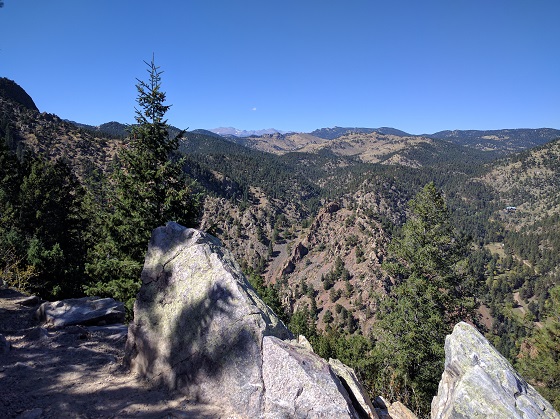
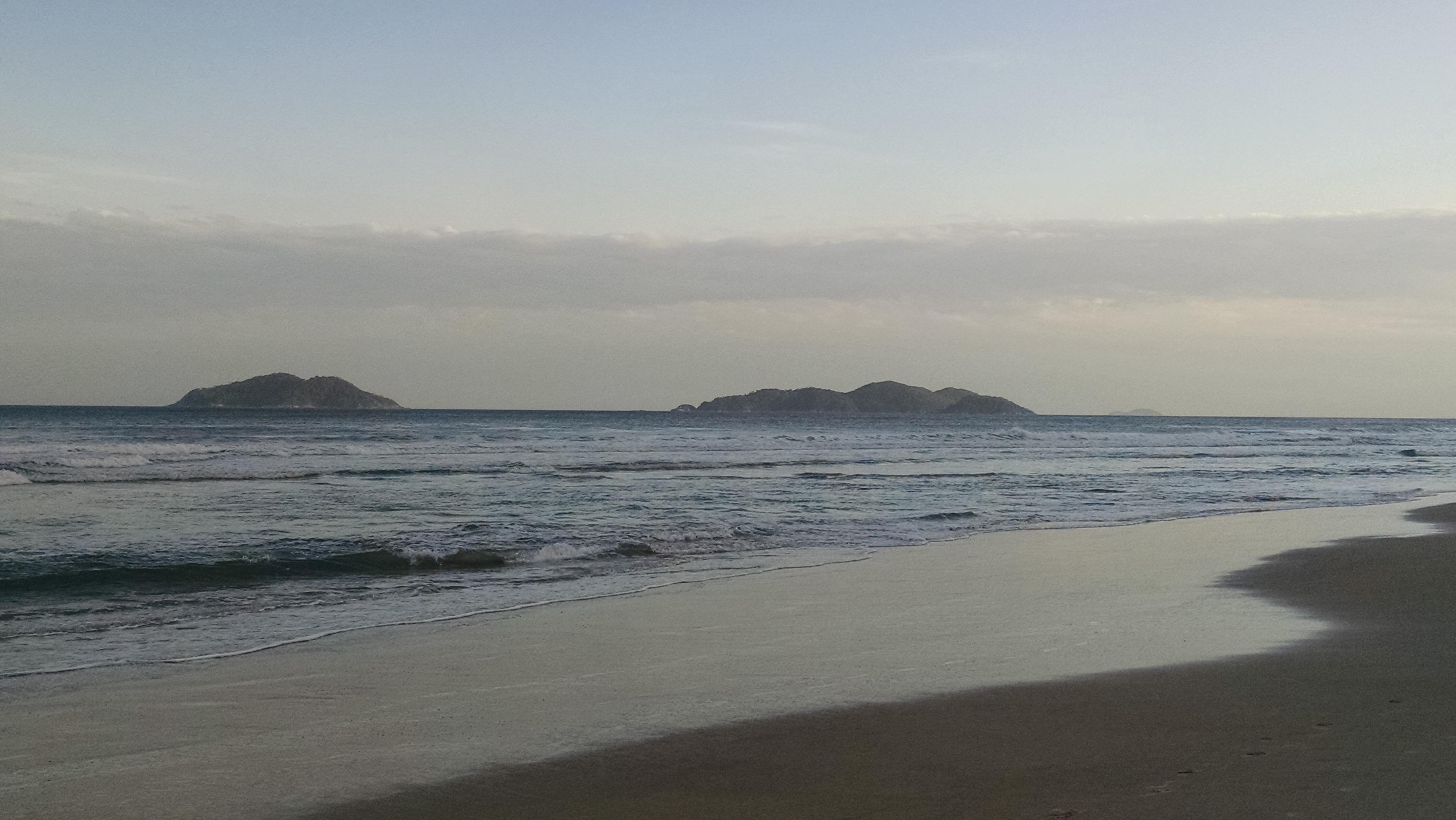
Neal turns out to be quite a gardener so we spent an hour or so harvesting, cleaning, chopping, and roasting veggies, grilling steaks, and drinking beer with the class. The “Happy Rolfing” cake pictured above was also delicious and accompanied by grilled peaches for dessert. Three of the students plus myself had signed up for a movement session with Heather Starsong at 7 so the party wound up in the early afternoon and we headed back down to Boulder.

The session with Heather was wonderful and again I was struck by what it’s like observing someone who’s been doing something for something like 40 years now. I hung back a bit and let Heather focus mostly on the students, who need to have done a certain number of movement sessions to graduate the Rolfing training, but still got a lot out of watching her work. There were also some emotional moments towards the end which made me glad to see the students getting some exposure to the power of the Rolf Movement work.

Following this I headed over to Caffe Sole for the tail end of a jazz group and some dancing. I only caught the last 40 minutes or so, but got a few really nice dances in and the followed a couple of close dance friends over to Oak at fourteenth on the Pearl Street Mall for a few cocktails. The drinks were absolutely delicious and sitting at the bar for an hour or so just talking sailing, teaching, and cocktail lore with the bartender was a great way to cap off the night with someone passionate and still driven about what they do.


Day 42 – September 25

uc516_day_42_rattlesnake_gulch

Sunday dawned a little brighter and a little earlier than I would have liked as I got up early to talk with a friend back East who had thought we set things up for an hour later. By the time she called I was on my way to Dushanbe Teahouse to meet my 10-series client and debrief on the series plus talk about her plans to train to be a Rolfer. We had a great talk, lots of good conversation about various topics relating to her session, plans, and how to help set up her life to support her training which is the sort of thing I think will serve her really well when she does get into the program.

After tea I headed out to meet the friends for a hike up Lion’s Lair but since it was around noon by the time we got going, we decided to shift and head to Eldorado Park and hike the Rattlesnake Gulch trail instead since it was a more gradual trail and tends to be more shady during the day. It was a beautiful hike up and I thought I had taken this great photo sphere shot from the Continental Divide overlook point but it turned out to only save about half the sphere, so, sigh, but pictured above is still a pretty good straight ahead shot of the Divide.

Following some trail time I headed over to Vapor Distillery to meet one of my cousins for a few drinks the from there to The Post Brewing Co. for dinner with some friends. Some delicious upscale Southern type food and drinks ensued and I finally headed home around 9pm to clean out and return the rental car before a bit of Netflix time and then bed.


Structural Visceral Integration class review

In early April I attended Bruce Schonfeld‘s Structural Visceral Integration for the Low Back, Pelvis, and Abdomen class in LA on my way down to Advanced Training in Brazil. Admittedly, it was a class that I signed up for first and foremost because I needed the credits. I had been given a pass on my prerequisites for Advanced Training in Brazil and was one RISI Manipulation Credit shy of fulfilling those requirements and being able to graduate. So I’d been on the lookout for anything I could do to complete that credit between Modules 1 and 2 and Bruce’s class in LA the weekend on my way down to Brazil was a great option.

I’ve taken several of Jon Martine’s Neural Manipulation classes in the past 6 years and gotten a rudimentary feel for working with viscera from his Neural 2 class so Bruce’s class felt like a good way to further that knowledge. And around the time I signed up for the class it seemed like I started seeing a number of low back pain classes that seemed to involve a visceral component. So with that lead-up in mind I arrived in class ready to soak up any tips I could.

*Except* for the the fact that I also arrived in LA Friday morning sans my US Passport very much needed for my flight to Brazil Sunday evening…

As I had gone through TSA at the airport I realized I had forgot to put my passport in my carry-on. Thinking I had left it in my checked luggage from packing, I mostly let the thought linger calmly through my flight out to LA. Upon arrival to LA, I got my checked back, found the zipper partially open, and with no passport to be found. So, “shitshitshitshitshit”, I go ahead and get to my airbnb and spend several frantic hours calling every airport along my way, TSA, the State Department, and the Brazillian Embassy in LA all to no avail.

I remember putting my passport with my bag but not taking it back out but on the off chance I’d left it at my house which is currently totally packed up and listed for sale. After realizing nobody with a key to my house is in town I call a friend who just happens to be on the road 10 minutes away from my house. Because the house is up for sale, there’s a lockbox on the door and it turns out I’d taken the passport out and put it in a dresser drawer. With an hour or two to spare my friend is able to get the passport to FedEx and overnight it to me.

All this to say that I came in to the training pretty wound up and Bruce was cool, calm, and helpful with my flitting in and out at first making calls. And the staff at Yo San University was great and helping me make sure FedEx could make the delivery and what directions to give them. And much as it wasn’t exactly my plan to show up feeling crazy and freaked that I might not be able to make it to Brazil, I think it speaks well to a class when the instructors can roll with that, help you settle, and move along into the material.

Day 1 – Friday Evening – Assements and Feet

Day 1 started in the evening with about 4 hours of class time from 5-9. We talked a bit about what we’d be working with, introduced ourselves, etc. The class was about 1/3 Structural Integrators and 2/3 folks coming more from a craniosacral or Barral type background.

Our first work was in the vein of doing structural assessments. Something I’m pretty familiar with from the Rolfing world of standing up in front of a room full of people in one’s underwear and having them comment on what they see structurally and functionally. It’s curious to me how quickly a group assessment of a single model tends to move into “negative” territory and it can definitely be challenging and deflating to stand there while a whole group of your peers just points out everything they see off in your structure. That said, I think Bruce actually did a nice job of influencing the assessments to stay more balanced, looking for both strengths and areas for improvement.

Then it was onto working on feet, testing mobility in the myriad number of joints in the feet and simple ways to help mobilize them. I’ve had similar ideas taught in basic Rolfing training classes, but taught for beginners in a fairly protocol-oriented fashion. So it was fun and interesting to see Bruce’s take, some of the ways he made testing more efficient, more interactive, etc. Day 1 ended, I sauntered quietly home, put myself to bed, and set an overly early alarm to make sure I could eat and be back at Yo San early in case FedEx arrived before the staff did.

Day 2 – Saturday – Legs into Viscera

Day 2 began bright and early for me with an air of cautious optimism and trepidation about my passport. It arrived at the first break and I would spend pretty much the next two days repeatedly double checking that it was in my pocket or backpack. Each time, it was. In hindsight it was a good lesson about how the stories we build in moments of panic can stick with us long after the initial upset.

The work of the first half of day 2 took us into the legs, hips, and pelvic floor. One of the things Bruce often repeated through the class was “I’d rather underwhelm someone and lose them as a client than to overwhelm them and cause them harm.” Given the range of skill levels and experience from freshly minted Rolfers to 30 year veteran bodyworkers I found this to be a valuable thought as we dove into sensitive areas and heavily used muscles.

After lunch (I decided to get my obligatory In-N-Out Burger for the trip), we delved deeper into the outer layers of the visceral compartment. Bruce had a good number of videos at this point taking us through dissected territory of the structures and viscera we’d be working with. A few groans could be heard from those with more sensitive constitutions to the imagery but for me it was fascinating and great for getting a starter image of where we would be working.

For me, one of the more valuable factors for this class was the way Bruce allowed the practice time to evolve. Shorter 2 and 3 day CE classes have a tendency to be a very show-and-copy based model of education, what I call “Here’s the thing, do the thing, here’s the next thing, do the next thing, etc.” This class encouraged experimentation and treating more like we would in practice, following the tissue and working with our intuition or inspiration moreso than following a protocol. It made for a nice mix of experiences too going from trading with highly experienced practitioners to some very new bodyworkers and being able to adjust what we were doing and how we were learning accordingly.

Day 3 – Deeper into the Viscera

The final day was all visceral material in terms of new territory. More videos, more work into the abdominal space, talking about organs and their general placement and exploring ways to test and move them.

Click the Omentum Tree to see more about the anatomical Greater Omentum

Click the Omentum Tree to see more about the anatomical Greater Omentum

The anatomy portions lead to one of my revelatory moments in the class which was the existence of two anatomical structures called the greater and lesser omentums. They are a sort of pair of fatty curtains hanging off of the greater and lesser curves of the stomach that act as a part of the body’s immune system among other things. It was one of those ah-ha sort of moments realizing that this piece existed in the body helped to create an ability to feel them when working on someone. And while it could be all in my head, it did seem that two weeks later in my advanced training course I ran into an adhesion in a client that felt exactly like what I imagined to be the greater omentum and wouldn’t seem to fit with any other visceral structures that I was aware of.

Sunday seemed to be a closed for lunch day for a number of the local restaurants so I ended up at In-N-Out again, this time with a classmate which ended up being a really great conversation. I spent the afternoon noticing how some practitioners would dive into visceral space faster or slower or more or less aggressively than each other and feeling out my own preferences for these factors. At the same time, I was playing with how to receive and benefit from a range of touch instead of fighting the fact that someone I was trading with might bring a different default touch than my own.

My flight to Brazil left at 9 on Sunday, about 3 hours after the class was due to end. As we eased into the afternoon of the class, I did find myself wondering for a bit if receiving loads of visceral work before an 11 hour international flight was the best idea given the occasional tendency for visceral work to “get things moving” in the digestive and beyond departments. I had a nice integrative session at the end of the day though and then Bruce offered to give me a ride to the airport as he was picking someone up shortly after class which afforded a nice chance to talk through a few more things and put a nice sort of personal closure on the workshop for me.

Aftermath – Anatomy as my Growing Edge

I picked up a decent number of little tricks or ideas from this workshop, but my biggest take away seemed to be that anatomy knowledge is a big part of my growing edge. As I’ve added understanding both of the existence of structures, but also the wide variability of human anatomy, it seems to be a major factor in my work improving lately. As such, this class lead me pretty quickly into the idea that I wanted to take on a cadaver dissection lab next.

I’d heard about them for years since the early stages of Rolfing training and Gil Hedley was always referred to as being a great source for anatomy workshops. Bruce had referenced his dissection labs several times over as well so the next week after finishing this training, I was looking up workshops with Gil and booking a trip to St. Andrews, Scotland to study with him. In some ways, I think it might be one of the most telling things about the usefulness of Bruce’s workshop that almost everyone in class was already planning a next training to build off of the class by the end of it.

Advanced Training in Brazil: Round 1 – Welcoming the Other Side

Rolfing Camp At The Beach to be exact

Rolfing Camp At The Beach to be exact

As I begin writing this, I am lying awake on my last night in Brazil after three and a half weeks of work and play deepening my relationship with my work as a Rolfer® and myself as a human being. It has been an intensely beautiful experience being here with a great many more twists and turns than I expected. Nonetheless I still find myself reverting back to the descriptor I’ve used the past 5 months when clients would ask what I was going to learn which is “It’s basically Rolfing Camp”.

And in many ways, it’s true. I just found this article by one of my classmates on the idea of Basics vs. Fundamentals (TL;DR – basics are easy and something you “get” and then are done learning them, fundamentals are primary ideas and skills that you can practice for the rest of your life). And in many senses of the word, I saw this Advanced Training course as a fundamentals class both for the students and the teachers. While the class for me was not tons of new information, it was a really good review and deepening of existing knowledge, getting to see it presented through the view of 30-year-veteran Rolfers which is something that never fails to leave me with new angles or ideas to think about.

The Basics of the Advanced

  • The training was held in the island city of Florianópolis, Brazil.
  • This was the first of two rounds of 3 week apiece, 4 days of class, 3 days off per week.
  • Class was taught by Lael Keen  with Karen Lackritz assisting.

    Our classroom for the training

    Our classroom for the training

  • Lael and Karen taught primarily in English with a translator, Dieter, translating to Portuguese with assistance from the class, the majority of whom were at least bilingual in English and Portuguese.
  • There were 8 other students, 2 Americans and 6 Brazillians, all female. It made for a curious book-ending of this year with the Scarwork class I took in January and this class in November being cases of me in a class of all women.
  • The general format of class was covering material (feet, spine, anatomy, functional movement, practicing techniques, etc.) for the first 3 days each week, then watching both Lael and Karen do a demo of a full session on an outside client (two other Advanced Rolfers from the local area), then Thursday afternoon each week we traded a session with a classmate for a series of 3 sessions.

    MONKEYS

    ERMAGHERD, MONKEEES!!!

  • In my experience, Brazil has also been particularly amazing at feeding classes, so we had coffee/tea breaks in the morning and afternoon and for the class days we had hired a local chef, Tito, to prepare lunch as well.
  • There were monkeys at my house that would come begging for bananas. They only want bananas and will give you funny looks if you try to give them mango instead.

Structure and Function and Function and Structure

One of the first things I recall seeming important to Lael’s class plan, and one of the things that drew me back to Brazil, was a strong emphasis on the inter-connectedness of structure and function. Or perhaps more accurately, a clarifying that structure and function exist in a co-dependent fashion and one cannot affect one independent of the other. While all the Rolfing training I have received has worked with form and function together, the trainings I have been to in Brazil somehow seem to take it a little deeper or make that relationship a bit more of a primary focus than some of the trainings in the US. And the primacy of it in this course helped me gain some better insights into when it might be more effective to start approaching an issue with a structural intervention vs a functional one.

Mr. Bean, the class pet, attempting to establish dominance, or maybe just do some back work on me

Mr. Bean, the class pet, attempting to establish dominance, or maybe just do some back work on me

The deeper focus on relationship to the world as an influence on movement is another of the big reasons I chose to come back to Brazil for my Advanced Training. In 2008, I had chosen Unit 3 training in Brazil in part because I expected the Movement Training to help me be a better dancer. It ended up leading me to entirely rethink my ways of teaching dance and create an approach that was radically different from how I’d learned to dance originally. And that energy of relationship was borne out in this class as well, with the techniques we practiced in the body leading to a broader question of “How does what we are doing help our clients or ourselves relate to the world?”

Lots of Review, Tidbits of New

In general I found the material to be more review and deepening of information I’d encountered before. Some of that may be that I took unit 3 from Jan Sultan who is one of Lael’s primary influences as a Rolfing instructor. Nonetheless, the training was a great chance to review, dive into material through a different instructor’s perspective, and pick up details I missed in prior trainings. In general I felt like I deepened my understanding of some fundamentals and picked up some good bits of information:

  • Ida Rolf used to carry a question for students of “Where would you work if you could only work on one spot in the body?” and her answer for herself was the 12th rib.
  • The lateral arches of the feet support the medial arches, Lael had some great anatomical slides and illustrations for this which I had not seen before.
  • A general review of spinal mechanics gave me some points about the vertebral facets to think about which I had lost track of somewhere in the last few years.
  • Time spent digging into the concept of hapticity (or the more-fun-to-say hapticidade in Portuguese), a sort of combination of sensing and moving at the same time and letting the two influence each other. One of those fundamental skills that I expect to be developing and deepening for the rest of my life.
  • Some new-to-me ideas from Lael about using interpersonal relational tactics to help clients integrate movement options into their interactions with the world.
  • We got a fairly high-level introduction to Ron Murray‘s  work with Lemniscate  movement which I haven’t explored much with clients, but am interested in exploring deeper at some point.

Third Week Openings

There is a curious energy that arises with these sort of longer-form trainings. I’ve only experienced it as a student so far, not as a teacher, so I don’t have a complete picture but there seems to be a quickening of transformation that occurs. I have often said that one of the things I loved about competing in dance was that involving the energy of a support crowd clapping and cheering can spur dancers on to a level they rarely or never achieve on their own. And I find something similar happens with Rolfing trainings as though the combined group’s energy supports us changing or growing in ways we might not have on our own.

This energy seemed to be in full swing by the third week of training. Lots of us were having some very deep and meaningful shifts in our ways of being. Some blossomed, some struggled, I experienced an incredibly vulnerable heart opening moment in front of the class where I’d pulled away from a similar moment in my Unit 2 training 7 years ago. One of the instructor demo sessions involved a client reliving the birth of her child via C-section and I cried as my own pelvis mimiced the release patterns of the woman on the table. Even the class format itself shifted mid-week to accomodate a need for more integration time amongst the bodies in the classroom.

Outro Lado – Welcoming The Other Side

In the final week of class I was thinking about how to identify a theme to the whole module and the words that came to mind were “outro lado”, Portuguese for “other side”. Those words stuck as a good descriptor for the shifts I had watched occur in myself, classmates, and even translators and teachers over the prior two weeks. Each of us delving into some other side of our personalities or our work that diverged from our normal preferences but brought us into a greater potential for balance and adaptability. And it came with a gentleness and acceptance that I could only put together as “Welcoming the Other Side”.

Living_room_mural

The house I rented during the traing happened to be owned by a local artist who had decorated the house with carvings, murals, and various canvases. The great feature mural of the house was one of the living room walls which boasted an entire wall painted with the mural above, reinforcing that idea of the other side for my experience of Brazil. On my last day in Brazil as we had breakfast and chatted about the house he mentioned that he had completed the mural in a day and had always wanted to go back and finish it. I shared the idea I had heard that a painting is never completed, you simply stop working on it (apparently the quote is typically translated “Art is Never Finished, Only Abandoned” – Leonardo DaVinci).

WatercolorWe diverged into discussing the course and how Rolfing is like watercolor in the sense that you take a stroke, then leave it alone for a while allowing the colors to bleed out into the person’s life, then repeating the process session by session. My host thought for a moment, then disappeared into his workshop as we were leaving, returning with this beautiful watercolor as a gift to mark our discussion. Being unprepared to transport paintings and having no suitably large books, I managed to get the painting safely home, tucked between the keyboard and screen of my laptop.
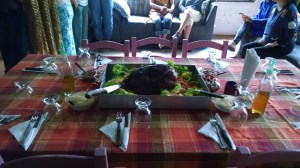
As I’m finishing this post it’s the beginning of January, just over a month since I boarded a plane home from Brazil. It seems at once very recent and yet long ago and far away that I was sitting down to Thanksgiving dinner with my classmates on the last day of class (yes, we graduated Round 1 on what would be Thanksgiving Day in the U.S.). Brazil took me deeper than I expected in directions I had not anticipated, but it has definitely left it’s mark in ways that continue to improve my work with clients and my relationship with my own body. I’m looking forward to further explorations, new inquiries, and super grateful to be returning for Round 2 in April!

Finishing the Training with Turkey

Finishing the Training with Turkey

Working with the Space Between Spaces: Explorations in Wholeness Class Review

One of the keystones of my growth as a Rolfer so far has been getting a sense of more tissues in addition to fascia and working with how they relate to each other. As I’ve grown more competent and comfortable with the variety in the body, I find my sense of the space between them growing deeper and more refined. So when I saw the listing for Thomas Walker and Gale Loveitt’s Explorations in Wholeness class it read like a class totally up my alley and a great way to deepen my use of those “spaces between the spaces”.

I did my Unit 2 basic Rolfing training with Thomas and he was a strong influence in developing the lighter side of my Rolfing touch and listening skills. The basic training in Rolfing was an excellent grounding in finding what this class might call “the hard stuff” muscles, bones and the like. Explorations in Wholeness added a depth for me of finding and feeling into “the soft stuff”, helping me find a way to contact softer parts of the tissue or anatomy more prone to hiding and finding ways to influence the body to connect more or to rediscover connections that past experience had disrupted in some fashion.

The essence of this class lay in working with various craniosacral rhythms. It’s not an area I particularly understand well nor am I sure the technical details would be helpful for everyone so I’ll relate it to my image of choice for the class which was ocean tides and waves. There are individual waves in the ocean breaking nearly every second on the shore, there is the cycle of high and low tide twice daily and in between these there is that middle cycle where the individual waves are washing higher or lower than the previous waves upon the beach every minute or two.

The work is… challenging to describe and honestly, my initial reaction was to resist naming it or calling it anything particular lest I narrow the potential of the work into some set box. That said, I also like to be able to communicate thing with more than just shrugging and saying “it seems to work” so I’ve tried to break out some ideas of how I describe this work to clients and how I might describe it to other practitioners.

For Clients

Every so often, as I grow as a practitioner, I encounter the idea that the ultimate goal is not for me to fix anyone, but for them to help engage their own healing mechanisms. Those are the kind of results I generally saw and felt with this work. Clients who I had worked with for several years seemed to notice me suddenly finding things at a deeper level, I honed in faster on where to put my hands with newer clients, and for my first week or two back almost everyone drifted to sleep at some point during their session.

I’ve also tried this work a few times with some very long-term clients and found it helps them access a level of strength and organization that they weren’t able to previously. I recently felt drawn to try a full session of this work with a client who I felt didn’t believe in her own inherent wholeness. The result was a deeply challenging session that stirred a lot of old feelings and hurts but several days later her whole sense of being had softened, she seemed more settled in her body, and some of her more kinetic energies had found a way to chill out.

From the client side, I think this work helps tap into a depth of calm in the nervous system that’s often hard to achieve in today’s world without going deep into the woods or far out to sea. It’s essentially providing a safe and supportive space for the brain to cool down and get out of the way and a sort of deep relaxation to come into play and help reorganize patterns of movement which in turn can build into lasting changes in how we hold and present ourselves and how we relate to our own stress.

For Practitioners

As I listened to the stories of Rolfers in this class I would say I found a theme of searching for something. A number of the newer Rolfers in the group talked about struggling to know what to do with clients where a number of those trained further back talked about looking for something softer, less “hammer and tongs” in our work. How to be effective when “mashing fascia” isn’t your bag or what to do when you don’t know what to do.

My impression going into the class was that this work would be a way to help bridge between layers, to work on the spaces between the spaces. And to be sure, there is a great deal of that in the work and it’s helped me find some ways into things, both structural stuckness and functional inhibitions that I didn’t have a tool for before when I was thinking of more specific tissues. In a fairly exacting sense, the work is about contacting fluid more than tissue, allowing not just for working into specific areas but also working with the uninterrupted wholeness of the body. It also involves a sort of stillness and patience that I find greatly aids in asking questions of the tissue and letting the body lead me into helping rather than feeling like I have to go in knowing where things need to move.

Fish-to-manIn a sense the work remains mysterious to me, albeit effective. I’ve struggled for several months to find an elegant way to say what I think I’m doing with this work currently but I finally hit on it in my first Advanced Training Module. I found myself wanting to do a full session of this work on a model client and since neither of the instructors were familiar with the work I was scrambling a little to describe just what in the hell I was after. The lead instructor, Lael Keen, had made several statements earlier in classes about working with ligamentous beds as “speaking to the dinosaur intelligence of the body”. Standing in front of the class trying to give an idea of the session I intended to do I finally came up with “I want to speak to the fish that existed long before the dinosaur”.
And Space to Grow…

Where many of the classes I have taken in my career have been fairly easy to describe, this work continues to almost defy my desire to describe it. It seems that I almost feel more effective in the work when I allow it to remain mysterious and exploratory rather than fixing a description or expectation to it. The essence of it seems to be in attention and allowing, skills that are at once inherent in all of us and yet can also be honed to greater depths or wider scopes. Thomas made mention several times of how after 20 years it still amazes him how a shift in himself can result in a deep change in a client.

While I do like to be able to understand what I am doing when I put hands on a client and why it works, I sometimes find myself eschewing understanding and paraphrasing Arthur C. Clarke: Any sufficiently advanced technique is indistinguishable from magic. I don’t think this work is magic per se, but my short experience with it is that allowing it to seem magical made it more effective. The mystery allows space, the space allows exploration, and the exploration allow growth of skill to occur.

And in much the same way that the class focused on ease and allowing, the growth and integration into my work seemed to happen similarly. I’ve made pretty minimal effort to directly practice the work in the past few months but the last time I worked on one of my office-mates her immediate response was “You’re doing something really different. Your approach to the body has changed, like you’ve gotten out of your own way.” I suspect there is a great deal deeper I can go with this work but one of the things I really value about it is how it seems to blend across lines of different techniques and both deepen my current practice while also offering new avenues to explore and tools to continue exploring.

Scar Tissue Workshop with Sharon Wheeler review

In the past years, I’ve noticed the strongest trend in my Rolfing continuing ed and the one I’ve benefited most from is adding tissues to my repertoire. So about a month ago when a space opened up at a nearby (or at least within driving distance) workshop with Sharon Wheeler on working with scar tissue, I jumped at the chance. And boy am I glad I did because adding Sharon’s Scar Work to my skillset has already helped a lot of clients in the intervening two weeks and given me some new insights into how the body heals.

About the Workshop

Curiously, I wound up being the only male in a class of 15 women (including the instructors and assistants). I don’t gather this is the norm, but it was a curious experience given that most of my basic trainings in Rolfing were heavy on masculine energy. That said, the workshop was in many ways, exceptionally well suited to my kinesthetic learning style, a half day or so of demonstration, followed by 3 rounds of working on each other and then in a team fashion working on model clients, giving us the ability to rotate at will between clients, observe and attempt working on different scars, and stand back to watch when we felt moved to. If you learn well from a relatively unstructured environment, like getting your hands dirty in class, and want to work with your classmates as peers, I’d highly recommend Sharon’s teaching style.

About the Work

The work, I found kind of fascinating. Without going into too much detail, I describe it as very very light sweepy and scrubby type of work. In my head, I refer to it more as “noodling around” than “work”. I’m sure there are at least a couple layers of sophistication I still have to develop with it, but so far it’s been surprising how immediately it is possible to be effective with this work. Scars soften, mobility is improved, areas begin to feel integrated, and often sensation returns to areas that many clients have referred to as feeling not a part of them or dormant. And all of this with no pain and a very oppositional approach to the “you have to break it up” approach that I typically hear in regards to scar tissue.

Why I Think it Works

Sharon made it clear that while she has found this style to work for 40+ years, she’s not entirely sure why it works although they are starting to do research on it now. Because I tend to be a non-linear thinker and like to draw connections, I let my mind wander on the “why does it work” question throughout the workshop and came up with the following ideas. Note that this is just my working theory, nothing proven and subject to change as I go deeper into this sort of work.

My first impression was that it seemed like unlocking or restarting time in the body. The work seems to be similarly effective with recent scars as well as very old scars and in most cases the scars seem to soften and begin to blend in with the surrounding skin and, in a number of cases, nerve function seemed to return almost immediately. It’s almost as if the tissue reaches 80% or 90% healed and then somehow had gotten stuck, almost like it were cryogenically frozen mid-healing and the scar work thaws it back out and allows it to complete.

The working theory that I’ve developed around it is that the work seems to simulate licking wounds (albeit without the saliva). Most mammals seem to do this and while it’s typically explored as a method of cleaning, it seems possible to me that in the course of evolution, tissues have evolved to respond to licking by healing further and integrating better with the “original” tissues around them. While I don’t have evidence to support that theory, it does seem to make a certain level of intuitive sense to me and to most of the clients I’ve shared this theory with.

What I’ve Done With the Work

In the 3 weeks since the workshop I’ve played with a lot of different ideas and seen some great results with some general trends. Here are a few of the things I’ve been able to create with the tools from the workshop.

  • Worked on several C-section/hysterectomy/etc. scars. Saw hips find more neutral tilt and spinal/sacral tension on the opposite side tend to relax more or easier.
  • 2 appendectomy scars, both of which softened significantly and were able to twist through the torso more readily along with releases in back and hip tension.
  • Worked on my own circumcision scar. Found that the tissue softened a good amount, there were numerous signs of nervous system release in my body (stomach gurgling, shaking, etc.) and since then the tissue has been both softer, more sensitive, and I have experienced a distinct ease and better functioning in my pelvic floor.
  • Started recovering a divot in a client’s breast left over from a lumpectomy 8 years prior. The client had also been unable to feel her armpit by the breast since her cancer treatment and left with sensation restored to the area.
  • Worked with a 3x operated on ACL replacement for a soccer player who had been having trouble with it since the first surgery. After 2 sessions, reports that the knee is much more mobile and feels stronger than the leg that has not been operated on.
  • Starting to reassemble cartilage in my own right ear which was shattered in high school when I got cauliflower ear in wrestling. I’ve felt several pieces of cartilage “pop” back into place kind of like I’m shifting tectonic plates back into an alignment and my hearing in that ear has improved after a week or so of the ear going through a phase of feeling plugged up. Still some work to do there, but it seems to be making progress.

I’ve worked on a variety of other small scars in the meantime as well and in almost all cases I noticed that clients seemed to settle in on a deeper level after the scar work than I had typically seen them settle in past.

All in all, this has been a great style of work to add to my toolbox. It’s allowed me to help clients further resolve, heal, and integrate a variety of scars on both a physical and, in some cases, emotional level. Integrating the scars seems to make them more mobile, even out the color with surrounding skin, and allow for better structural work in and around the areas. I think it’s an excellent addition to helping people heal old wounds, fully resolve surgical interventions, and in some cases, recover nerve function that they were told might never return.

Many thanks to Sharon for sharing this work and being a gracious teacher. 🙂

Neural Mobilization Unit 2


At the beginning of December, I had the pleasure of taking another neural mobilization workshop with Jon Martine. This workshop dealt primarily with neural mobilization around the hips, shoulders, and spine as well as some visceral manipulation.

I was once again very surprised and pleased with how effective the work could be with a lot of patience but very little force. Particularly in working with the visceral components it often felt more like listening to the body take on a life of its own rather than making something happen. While I can tell there is still a long way to go with developing my skills around it, it does seem to be a great way to practice listening and following in the way I work.

I had some strong experiences in my own body related to the work as well. In particular, after having work around the collar bones and shoulders, I felt width in my shoulders on a level that I don’t think I have experienced before. It made me strongly aware of how often I hold postures that compress my shoulders or attempt to take up less space with my body than it actually occupies. While I’m fairly aware of having broad shoulders, it was the first time I can recall feeling them truly relax into their full width.

I also got lucky enough to be the demo body for the work on liver, lungs, stomach, and transversus thoracis. Because I have a mild-moderate pectus excavatum, the area of the middle and upper chest has always felt like a particularly problematic area for me to open up. Jon had me test with side bending before and after the work and the difference was pretty amazing. Before, I felt my ribs could side bend pretty readily, but something in the middle was hanging me up; but after freeing up the internal structures, it was like I could bend another 20 degrees further to each side!

I’ve since had an opportunity to play with this style of work with a few clients and I’m really happy with the results. I really like the effect it is having on my ability to listen better in fascial work too.

Neural Mobilization Unit 1

This post is imported from my original blog at RaleighRolfing.com

This past Thursday to Sunday I had my hands full… of nerves.  Inside Out Body Therapies of Durham hosted a workshop by Jon Martine on Neural Mobilization strategies.

The nerve fibers running through your body are not only surrounded by fascia, but also internally wrapped together by fascia as well.  Each nerve fiber is wrapped and then bundles of fibers are wrapped together eventually forming the full nerve.  Ideally, these layers of wrapping work together to allow the nerves to glide and stretch through the body the same way your muscles must stretch as you move.  This motion is beautifully illustrated in the video Strolling Under The Skin (Note that this video contains images of living tissue).

If the wrapping around the nerves becomes impinged or stuck, the nerves will signal muscles to contract in order to prevent the nerves from stretching too far or being damaged.  So sometimes what we may read as a tight muscle is actually a tight nerve using the muscle to protect itself.  By releasing the nerve and allowing it to glide, the muscles may be allowed to release their tone and move more freely.

Going into the workshop, I was not sure what to expect from this style of work but came out really thrilled with some of the results.  The workshop focused on arms and legs (Jon plans to be back in December for an axial nerves class) and I felt some incredible unwindings both in mine and other particpants bodies.

For me one of the strongest effects was felt in my forearms.  Having been in computer programming for 8 years, my forearms have taken on the inward roll of a keyboardist.  So when my arms would hand at my side, my thumbs would end up pointing at my legs rather than foreward.  This has contributed to other issues like rolled shoulders, a hunched posture, etc.  But with very little pressure, one of my classmates was able to unwind that twist by almost 90 degrees just by opening up the nerves in my arm.

I have since tried this with a few clients who had had limited response with fascial work and have been very pleased with the results.  For several clients who’s bodies were inflamed or wound up, neural mobilization seems to have been very helpful in allowing their bodies to relax, recharge, and hurt less.  It is really incredible to watch how someone’s body and entire system can settle with this work.

I’m very excited about adding this dimension to my work and grateful to Jon and IOBT for putting together this workshop.

Tag Cloud

Design a site like this with WordPress.com
Get started